Havana Brown
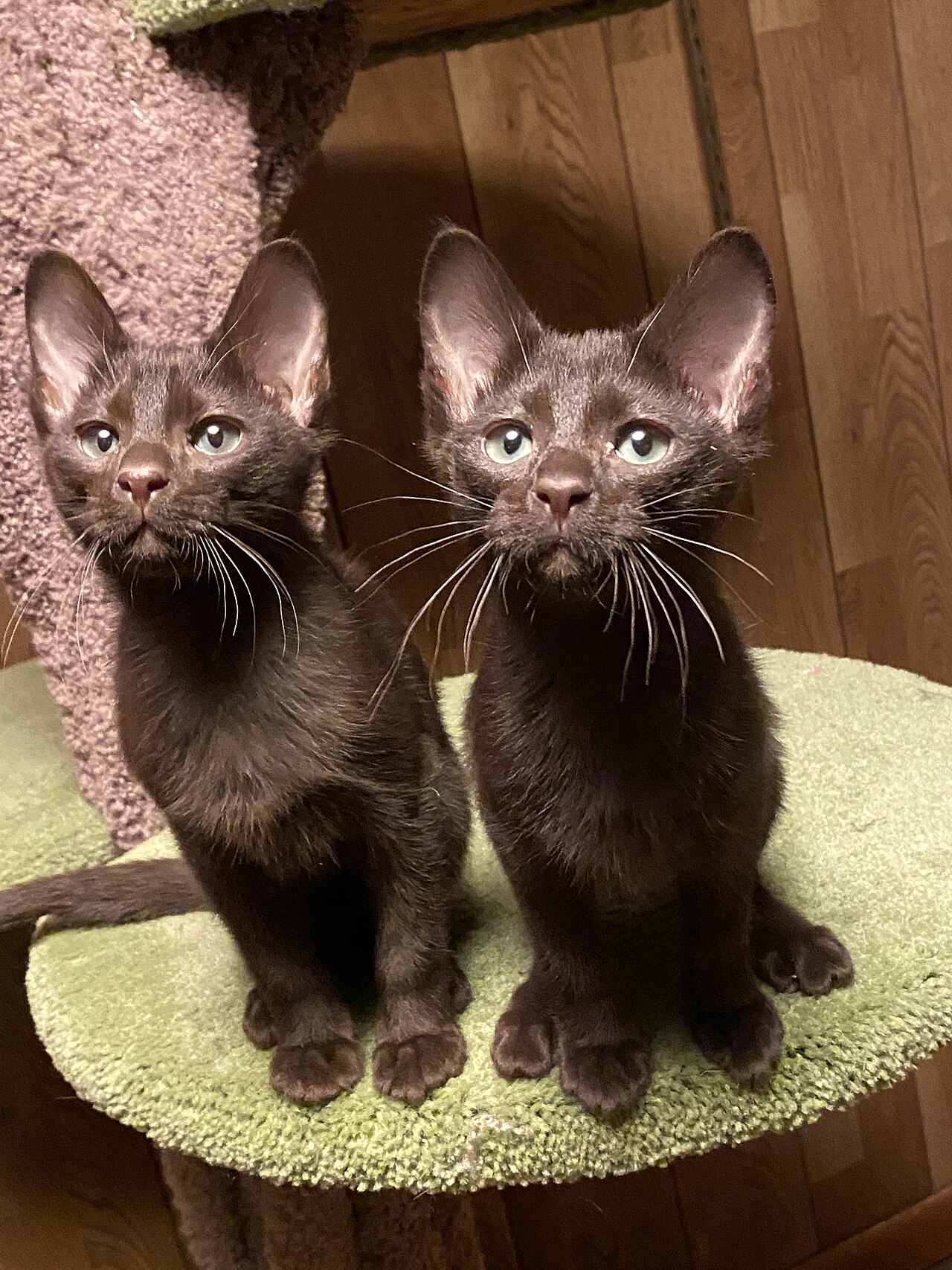

- Origin
- United Kingdom
- Type
- Shorthair
- Size
- Medium
- Coat
- Short and smooth
- Colors
- Solid warm, reddish brown
- Status
- Recognised by the CFA and TICA; rare
The Havana Brown is a pedigreed shorthaired cat with a solid chocolate coat. It was created on purpose by a group of British breeders in the 1950s, who crossed Siamese carrying the chocolate gene with black domestic shorthairs.
History
Solid brown cats were shown in Europe in the 1890s, some under the name Swiss Mountain Cat, but they faded away and played no part in the modern breed. In the early 1950s a handful of British fanciers, calling themselves the Havana Group and later the Chestnut Brown Group, set out to produce a brown cat of slender foreign type. Mating a chocolate-carrying Siamese to a black cat that also carried chocolate gave them chestnut kittens.
The name most likely refers to the color of Havana cigars, though some link it to the Havana rabbit, which has the same coat color.
From there the breed went two ways. In Britain it kept the Siamese build, became the Chestnut Brown Oriental and, after outcrossing, was absorbed into the many-colored Oriental. In the United States, breeders working from imported kittens kept the original look and bred only for solid brown. This moderate American type has been shown since the late 1950s and gained championship status with the CFA in 1964. Registries therefore use the name for two different cats: a chocolate Oriental Shorthair in some places, and the American-type breed in North America.
A related British cat, the Suffolk, was recognised by the GCCF in 2014. It is closer to the Oriental and is a separate breed.
The American type is considered endangered. In 2024 only 15 catteries were registered worldwide, 12 of them in North America.
Appearance
The Havana Brown is a balanced, muscular cat of moderate size, with nothing extreme about it. The coat must be a warm, typically reddish brown without tabby markings; kittens show faint markings that fade by their first birthday. The whiskers are brown too, the eyes are green and the paw pads are pink or rose. The head is slightly longer than wide, with a clear stop at the eyes and fairly large ears. Males are larger than females.
Temperament
Havana Browns are intelligent and curious, and they often use their paws to investigate things and to get attention. They tend to greet visitors instead of hiding. They attach themselves closely to their family, dislike long stretches alone, and often get along well with the family dog. Many like to ride on a shoulder or play with their owner’s hair.
Care and health
A gentle brushing once or twice a week is enough. No inherited diseases are known in the breed, though gingivitis may be slightly more common than in other cats, which is put down to its Siamese ancestry.
Facts on this page were checked against Wikipedia and may have changed since.