Tiffanie
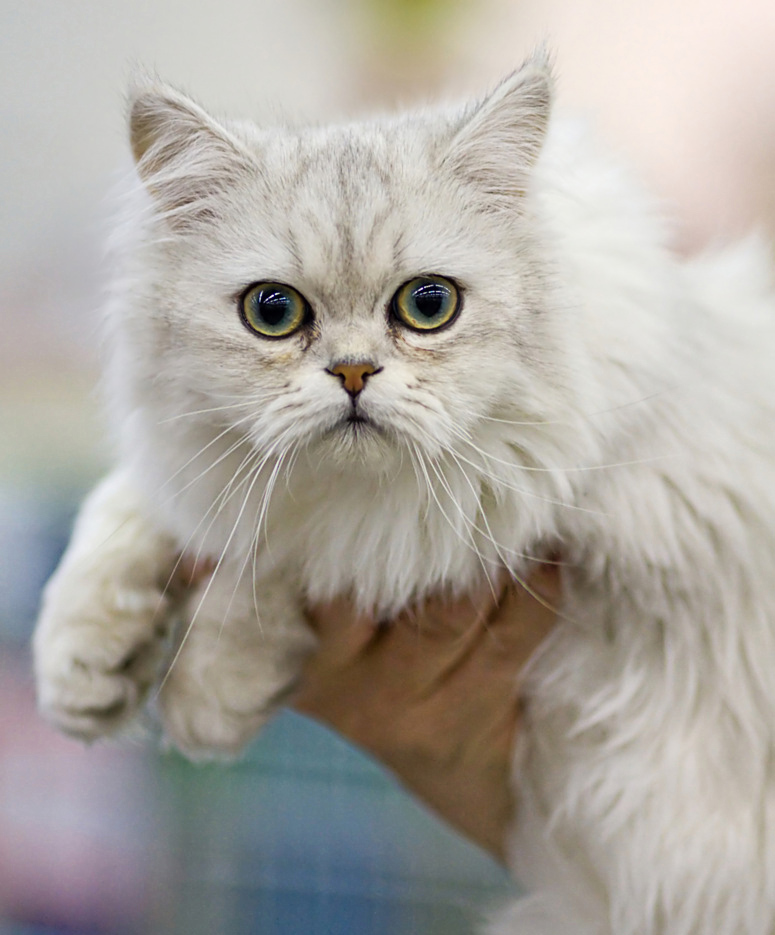

- Origin
- United Kingdom
- Type
- Longhair
- Coat
- Semi-long
- Colors
- All Asian Shorthair and Burmese colors and patterns
- Status
- Recognised by the GCCF; preliminary status with the WCF; registration only with TICA
The Tiffanie is the semi-longhaired cat of the Asian group of breeds. It is like the Asian Shorthair in every way except the length of its fur, and is generally accepted in any of the Asian Shorthair or Burmese colors and patterns. Among cat fanciers it is also known as the Asian Semi-longhair.
It is often confused with the Chantilly-Tiffany, an unrelated North American longhair that is now extinct. The name Tiffany is also used in New Zealand for a long-haired Burmese.
History
Like the other Asian breeds, the Tiffanie was developed in the United Kingdom during the 1980s. Its origins go back to matings between a Chinchilla Persian and a Burmese, and it was bred as the longhaired version of the Asian Shorthair.
Registries that accept the breed list it either as the Tiffanie or, within the Asian group, as the Tiffanie or Asian Longhair. It has full recognition from the GCCF in Britain, from the French LOOF and from the Southern Africa Cat Council. The World Cat Federation gives it preliminary status, and TICA accepts it for registration only.
The Australian Tiffanie
In some registries only silver or golden cats with tipped or shaded coats are accepted, and the breed is registered as the Burmilla Longhair or the Australian Tiffanie. One Australian body recognises the Australian Tiffanie and another the Burmilla Longhair.
The Australian Tiffanie was developed separately in the late 1990s, by breeding Tiffanies from Europe back to Chinchilla Persians. Both it and the British Tiffanie come from the same Chinchilla Persian and Burmese mix, but the Australian cats carry more Persian. Many are more than three-quarters Chinchilla Persian and keep the look and temperament of the old-fashioned Chinchilla. They are in effect long-haired Burmillas. The name did not gain acceptance outside Australia, and its use is declining.
Facts on this page were checked against Wikipedia and may have changed since.