Turkish Van

- Origin
- United Kingdom
- Type
- Longhair
- Size
- Large
- Weight
- 3–9 kg (7–20 lb)
- Coat
- Semi-long, soft like cashmere, water-repellent, no undercoat
- Colors
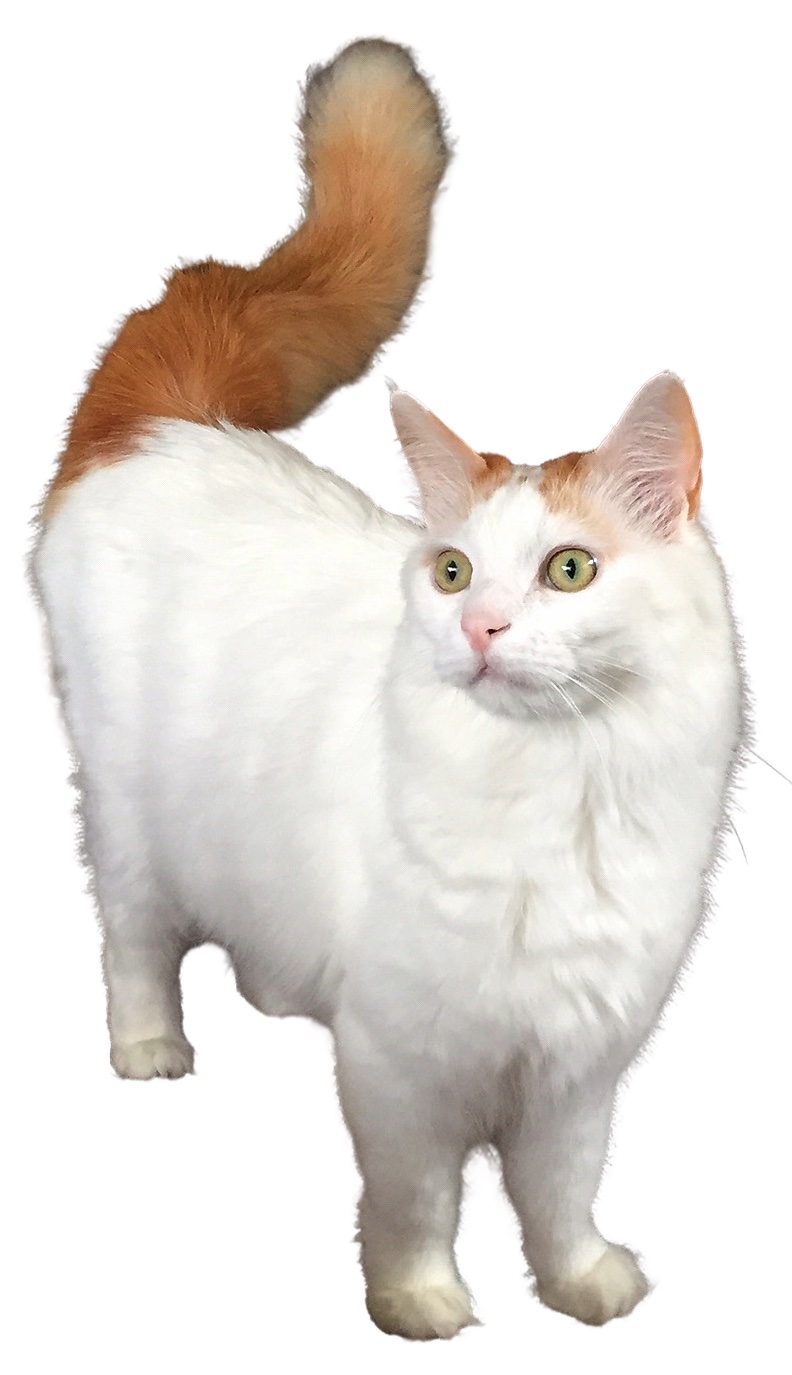
- White with color on the head and tail only; red tabby and white is the classic
- Status
- Recognised by the GCCF, TICA, CFA and FIFe
The Turkish Van is a large, semi-longhaired breed developed in the United Kingdom from the 1950s onward, using cats collected in several Turkish cities. It is known for the Van pattern, which takes its name from the breed: a white cat with color only on the head and tail. It is a rare breed.
History
In 1955 two British photographers, Laura Lushington and Sonia Halliday, were given two unrelated cats while working in Turkey. One came from Iskenderun in Hatay Province and the other from a hotel manager in Istanbul. Lushington took them home, and when their kittens came out just like the parents, chalk white with dark markings on the head and tail, she set out to establish a breed.
The breed is often said to descend from the mostly all-white Van cats of the Lake Van region, and it is easily confused with them. Lushington’s own writings show that none of the foundation cats came from the Van area, and it is not clear why the name was chosen.
The GCCF gave the breed full pedigree status in 1969 under the name Turkish cat. It was renamed Turkish Van in 1979 in Britain and in 1985 in the United States, to set it apart from the Turkish Angora. TICA granted championship status in 1985, and the CFA in 1994.
Appearance
The Turkish Van is one of the larger breeds: muscular, broad in the shoulder and short in the neck, with a moderately long body and hind legs a little longer than the front. Males weigh 5 to 9 kg (10 to 20 lb) and females 3 to 5 kg (7 to 12 lb). The cats take three to five years to mature.
The coat is a single layer with no evident undercoat, and feels like cashmere or rabbit fur. It is long and thick in winter and shorter in summer, while the tail stays a full brush all year.
Color on the head and tail may be red, cream, black or blue, with tabby or tortoiseshell patterns. Red tabby and white is the classic. Eyes are blue, copper-orange, or one of each. Solid white cats from the same stock are treated by some registries as a separate breed, and can be prone to deafness.
Temperament
The TICA standard describes the Turkish Van as highly intelligent, energetic, playful and somewhat mischievous. They tend to follow their people from room to room and are affectionate with their family, but they are not usually lap cats and many dislike being picked up. A 2021 Finnish study found the breed above average for fearfulness and aggression toward people, and below average for sociability.
The Van cats of Turkey are nicknamed “swimming cats”. Some owners feel the Turkish Van shares their liking for water, though some pet writers doubt it likes water more than other cats do.
Care and health
Van-patterned Turkish Vans are not prone to deafness. Deafness is mainly linked to white cats with two blue eyes, and solid white cats of Turkish Van stock may be affected.
Facts on this page were checked against Wikipedia and may have changed since.