Ragdoll
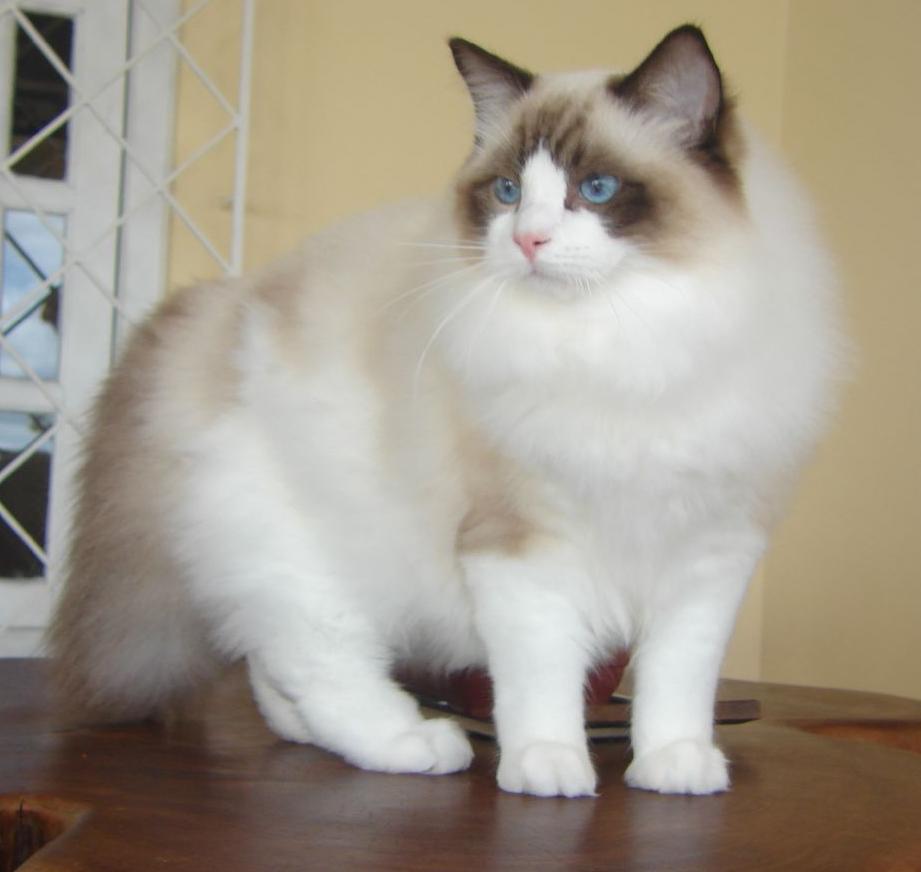

- Origin
- United States
- Type
- Longhair
- Size
- Large
- Weight
- 3.6–9.1 kg (8–20 lb)
- Coat
- Semi-long, silky and dense, with little undercoat
- Colors
- Pointed in seal, chocolate, red, blue, lilac and cream; colorpoint, mitted and bicolor patterns
- Life span
- About 10–13 years
- Status
- Recognised by the CFA, TICA, FIFe and GCCF
The Ragdoll is a large, semi-longhaired cat with a pointed coat and blue eyes, developed in California in the 1960s by the breeder Ann Baker. It is known for a calm, docile nature, and its name comes from the way many of these cats relax and go limp when lifted.
History
The breed began in Riverside, California, with Josephine, a white long-haired cat of no particular breed. In 1963 and after, she had kittens with unusually placid, affectionate natures. Two of Josephine’s sons, the black Blackie and the seal point Daddy Warbucks, and two of her daughters, Fugianna and Buckwheat, became the base of the breed, and every Ragdoll descends from them.
Baker turned her back on the established cat associations. She trademarked the name and set up her own registry, the International Ragdoll Cat Association, around 1971. In 1975 a group led by Denny and Laura Dayton broke away to seek mainstream recognition. Starting from one pair, they developed the standard that the major registries now use. A breeding pair and then eight more cats were exported to Britain, where the breed is recognised by the Governing Council of the Cat Fancy.
Appearance
The Ragdoll is one of the largest domestic breeds. Females weigh 3.6 to 6.8 kg (8 to 15 lb) and males 5.4 to 9.1 kg (12 to 20 lb) or more, and a cat can take up to four years to reach full size. The body is long, sturdy and muscular, with a broad chest, a short neck, a broad flat-topped head, large round tufted paws and a long bushy tail. The eyes are large, round and deep blue.
The coat is silky and medium to long. It is made up mostly of long guard hairs with little undercoat. Kittens are born white and color in over several weeks, reaching full color at three to four years. The colors are seal, chocolate and red and their dilutes blue, lilac and cream, with lynx and tortoiseshell variations. There are three patterns: colorpoint; mitted, which adds white paws, chin and belly; and bicolor, with white legs and belly and a white inverted V on the face.
Temperament
Ragdolls are described as affectionate, gentle, relaxed and easy to handle. They are often called dog-like because they follow their people from room to room, seek out contact and get along with other pets. They can be taught to fetch, stay playful into old age and tend to prefer the floor to high perches.
Care and health
The long coat usually needs brushing at least twice a week, and shedding may increase in spring.
A 2025 British study of more than 21,000 Ragdolls found a median age at death of 12.85 years; earlier studies gave figures of about 10 years. The breed is among those more often affected by hypertrophic cardiomyopathy, caused by a known dominant mutation. Cats with one copy are unlikely to show signs, while those with two are at much higher risk of severe disease, typically between one and two years old. Ragdolls are also over-represented among cats with urate bladder stones.
Facts on this page were checked against Wikipedia and may have changed since.