Dragon Li

- Origin
- China
- Type
- Shorthair
- Coat
- Short to medium, soft, dense and silky, no undercoat
- Colors
- Black (brown) mackerel tabby only
- Status
- Recognised only by China's Cat Aficionado Association; not recognised by the major registries
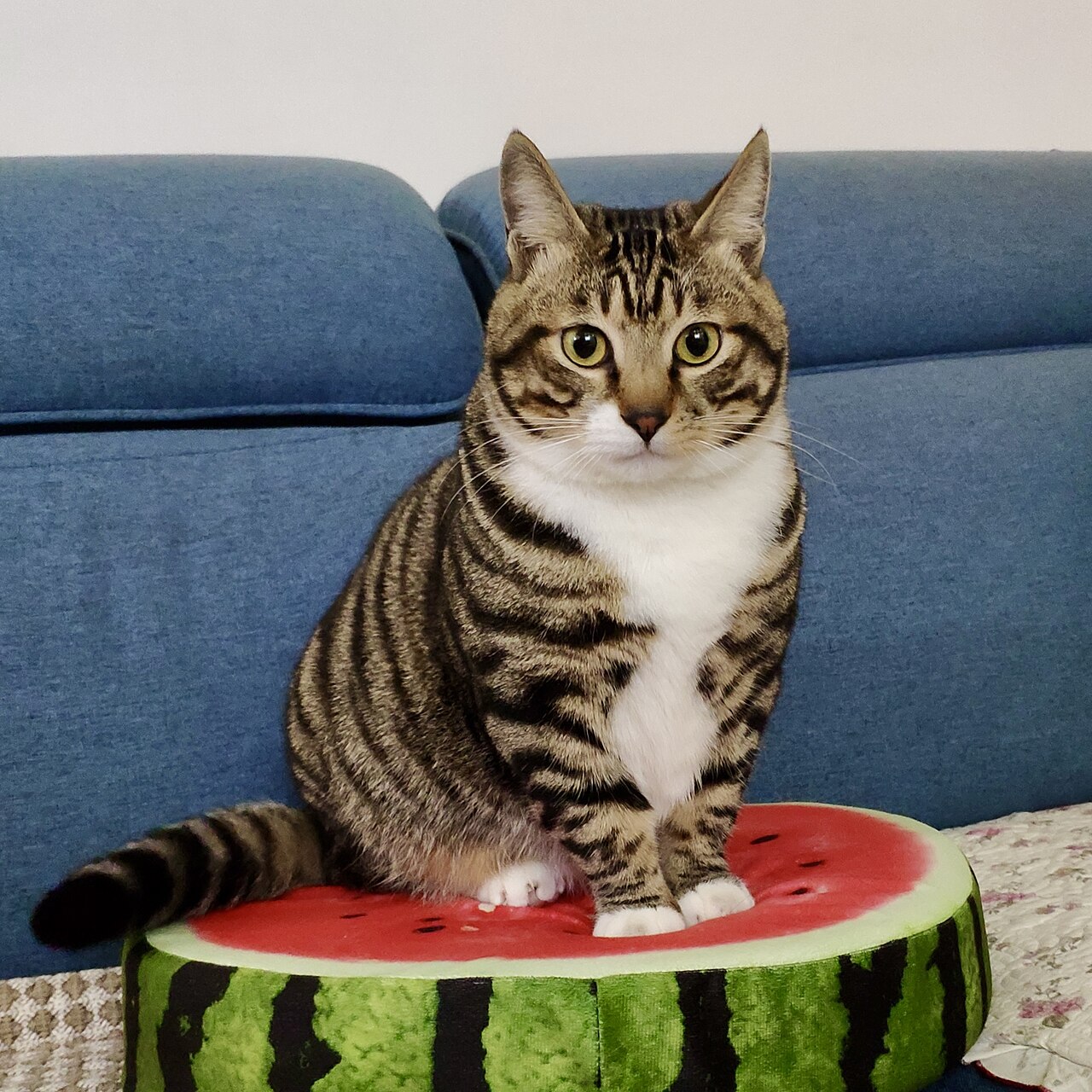
The Dragon Li, also known as the Chinese Li Hua, is a recently established breed from China. It was developed in the early 2000s from a common native landrace called the li hua mao, a name that translates roughly as “leopard cat patterned cat”. These native cats were long valued as hunters and appear in Chinese folklore.
History
Li hua mao is the everyday name for the original landrace in China; Chinese Li Hua and Dragon Li are newer names used abroad for the standardised breed. The dragon stands for power and good luck in Chinese tradition. The characters of the old name led to the cat being confused with a wild fox, hence the nickname Fox Flower Cat. It has also been claimed that the cat came from crosses between house cats and the wild Chinese mountain cat.
The breed made its first appearance as an experimental class in Beijing in January 2004, at a show held by China’s Cat Aficionado Association (CAA) with guest judges from the American Cat Fanciers Association. In 2005 a male called Needy won his class as a CAA champion, and was afterwards “married” to a breeding partner in a mock traditional wedding that drew press attention.
In February 2010 the US-based Cat Fanciers’ Association (CFA) accepted the Li Hua in its Miscellaneous class. A review five years later found little progress: only 8 to 14 cats were shown each year, about 50 over the whole period, with a single active breeder in the United States and fading involvement in China. Judges’ reports had also turned largely negative. The CFA removed the breed from Miscellaneous status on 1 May 2015. Since the CFA was the only international body registering it, the breed is now recognised only by the CAA.
Appearance
The Dragon Li is a sturdy, well-proportioned cat that matures slowly, taking up to three years. Females are usually smaller than males. The body is strong and rectangular with a wide chest, a short, strong neck and straight, muscular legs, the front pair slightly shorter than the hind. The paws are large, broad and oval, and the tail is a little shorter than the body.
The head is a broad modified wedge, slightly longer than wide. The eyes are large and almond-shaped, set at a slant, and green, yellow or brown, with green preferred. The ears are medium-sized, broad at the base and moderately pointed, sometimes with tufts.
The coat is short to medium, soft, dense and silky, with no undercoat. Only one color is allowed: black (brown) mackerel tabby on a brown-yellow ground. The pattern should be clear and strongly contrasted, with dark “mascara” lines on the face known as the tears of the dragon, a stripe along the spine, at least one unbroken necklace, vertical stripes on the body, and rings on the legs and tail, which ends in black. Paw pads are black.
Temperament
The breed standard describes the Li Hua as gentle in temperament, and it has a long reputation in China as a capable hunter.
Facts on this page were checked against Wikipedia and may have changed since.