Tonkinese
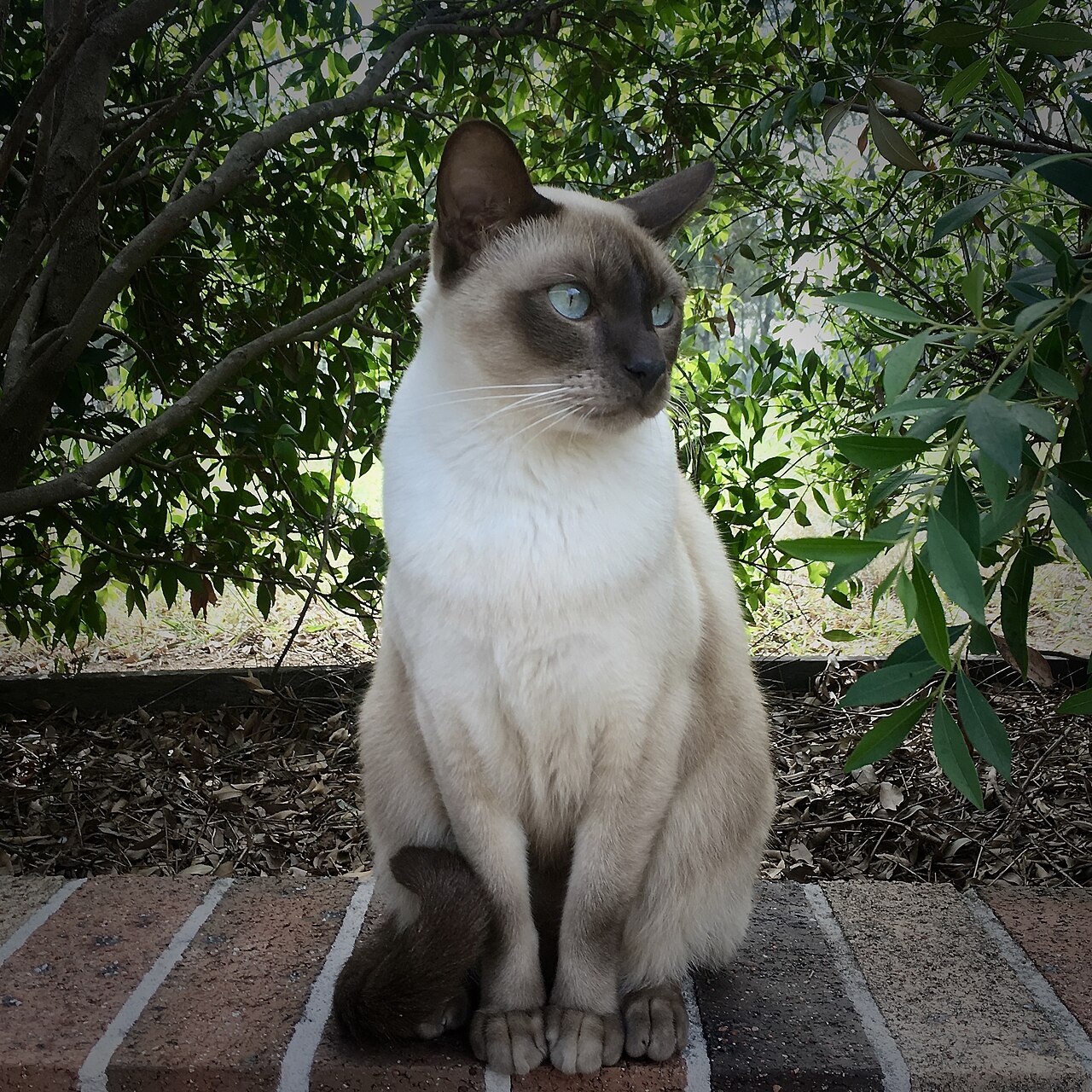

- Origin
- Canada
- Type
- Shorthair
- Size
- Medium
- Coat
- Short; a semi-longhaired variety also exists
- Colors
- Many colors in pointed, mink and solid (sepia) patterns
- Status
- Recognised by the CFA, TICA, GCCF and WCF
The Tonkinese is a house cat breed produced by crossing the Siamese with the Burmese. It sits between the two in build and in coat, and is best known for the “mink” pattern, a softened version of the Siamese points. The shorthaired form is the familiar one; a semi-longhaired form, sometimes called the Tibetan, is more popular in parts of continental Europe.
History
The modern Tonkinese recreates a type of cat that reached the West in the 19th century and was first known as the “chocolate Siamese”. Breeders noticed that some imported cats had aquamarine eyes and darker coats than other Siamese, and in 1901 the Siamese Cat Club recognised them as Siamese of the chocolate type. Many of the founding cats of both the Siamese and the Burmese in the West, Wong Mau among them, are now believed to have been Tonkinese. For decades such cats were registered as one breed or the other.
Interest revived in the 1950s. Margaret Conroy in Canada and Jane Barletta in the United States, working separately, crossed Siamese and Burmese to combine the looks and lively character of both. Canada recognised the Tonkinese as a distinct breed by 1965. The Cat Fanciers’ Association (CFA) granted championship status in 1984, and Britain’s GCCF recognised the breed in 1991. The name refers to the Tonkin region of Indochina, but the cats have no link with it.
Appearance
The Tonkinese is a medium-sized cat, midway between the long, slender modern Siamese and the stockier American Burmese. It is more muscular than it looks and feels surprisingly heavy when picked up. The legs and tail are slim but in proportion, and the paws are oval. The head is a gently rounded, slight wedge with a blunt muzzle, moderately almond-shaped eyes and ears set toward the sides of the head.
There are three coat patterns. Pointed cats have the dark face, ears, legs and tail of a Siamese on a pale body, with blue eyes. Solid or sepia cats are nearly uniform in color like a Burmese, with golden or green eyes. Mink cats fall in between, with a lighter body that tones with the points and blue-green aquamarine eyes. Mink results from one Siamese and one Burmese gene, so two mink cats produce on average half mink kittens, a quarter pointed and a quarter sepia.
Colors include black (also called natural, seal or brown), blue, chocolate (champagne), lilac (platinum), cinnamon, fawn, red and cream, and tortoiseshell and tabby versions occur. The CFA and WCF accept only the first four; the GCCF accepts more, and TICA accepts all.
Temperament
Like its parent breeds, the Tonkinese is active, vocal and fond of people, playful and curious about everything around it. That also means it can easily become lonely or bored. Its voice is persistent but softer and sweeter than a Siamese’s, and has been likened to a gentle quacking. Tonkinese are said to fetch like dogs and to enjoy jumping to high places.
Care and health
A 2012 review of more than 5,000 cases of urate bladder stones found the Tonkinese significantly under-represented, with a single case.
Facts on this page were checked against Wikipedia and may have changed since.