Cat breedsBobtail and tailless
American Bobtail
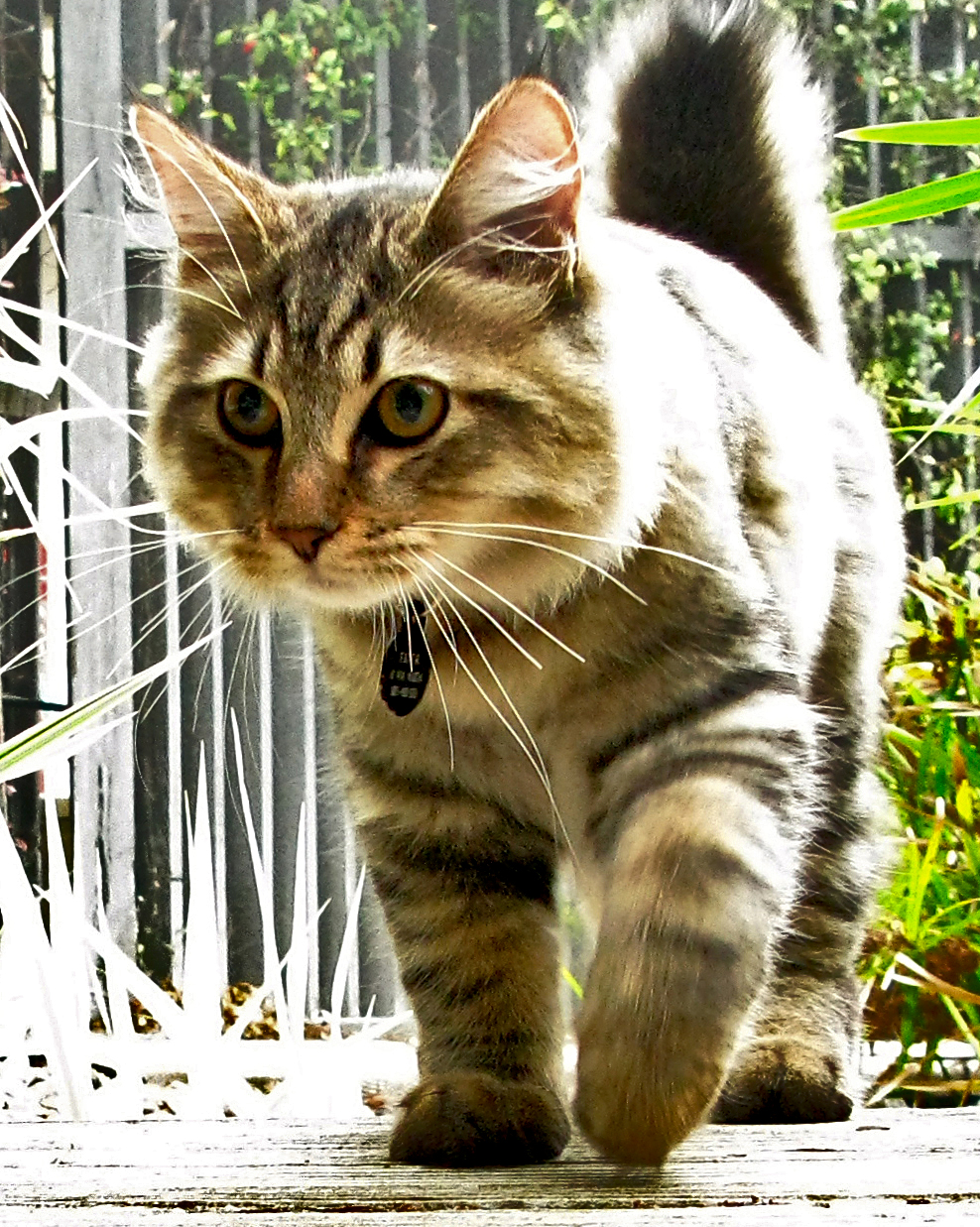

- Origin
- United States
- Type
- Bobtail and tailless
- Coat
- Short or long, shaggy rather than dense
- Colors
- All colors and patterns; the wild-looking tabby is favored in shows
- Status
- Recognised by TICA, the CFA, the ACFA and the WCF
The American Bobtail is an uncommon breed of house cat developed in the United States from the late 1960s. Its mark is a stubby tail, between a third and half as long as an ordinary cat’s, produced by a natural genetic mutation. The breed is not related to the Japanese Bobtail, the Kurilian Bobtail or the Cymric: the breeding programs were separate and the genes differ. The American Bobtail’s short tail is a dominant trait, while the Japanese Bobtail’s is recessive.
History
A popular story holds that the breed descends from a house cat crossed with a wild bobcat. In fact the tail came from a spontaneous mutation among domestic cats, possibly related to the dominant gene found in the Manx. The original line began with Yodie, a short-tailed brown tabby male, who was mated to a seal-point Siamese female. Most of those early bloodlines have since died out, and breeders reworked the cat into a strain that comes in nearly every color and in two coat lengths.
The International Cat Association was the first registry to recognise the breed, in 1989. It is now accepted for championship competition by TICA, the Cat Fanciers’ Association and the American Cat Fanciers Association. The World Cat Federation recognises it as two breeds, the American Bobtail Longhair and the American Bobtail Shorthair.
Appearance
This is a stocky, heavily boned cat with a moderately long body and a rectangular stance. The chest is broad and the hips nearly as wide, and the hind legs are longer than the front ones. The feet are large and round and may carry tufts between the toes. The head is a broad wedge with a wide muzzle, prominent whisker pads, strong jaws and a noticeable brow. The ears are medium-sized with rounded tips, and the eyes are close to almond-shaped and set deep. Eye color varies with the coat.
The tail can be seen above the line of the back but does not reach past the hock when the cat is at rest. It may be straight or curved, and some have small kinks or bumps along it.
The coat, short or long, is shaggy rather than dense or fluffy. A spotted tabby pattern that recalls a bobcat is the most typical, and show cats are bred toward that wild look, but the breed also comes in black, blue, brown, chocolate, cinnamon, fawn, lilac, calico, tortoiseshell and other colors, with or without white. American Bobtails mature slowly, taking two to three years to reach their full development.
Temperament
American Bobtails are playful and sociable, and some are very energetic, particularly as kittens. They adapt easily to new surroundings, which is why they are often said to suit people who travel. They are frequently described as dog-like: they come forward to greet visitors, seek out affection from people, and get along with other cats and with dogs. They like to climb, jump and explore, and they will stalk birds and small animals given the chance.
Facts on this page were checked against Wikipedia and may have changed since.