Cat breedsRex and curly-coated
Selkirk Rex

- Origin
- United States
- Type
- Rex and curly-coated
- Size
- Large
- Weight
- Males 5.4–6.8 kg (12–15 lb); females somewhat less
- Coat
- Thick, loose random curls; short or long
- Colors
- All colors
- Status
- Recognised by TICA, the CFA, FIFe and the GCCF
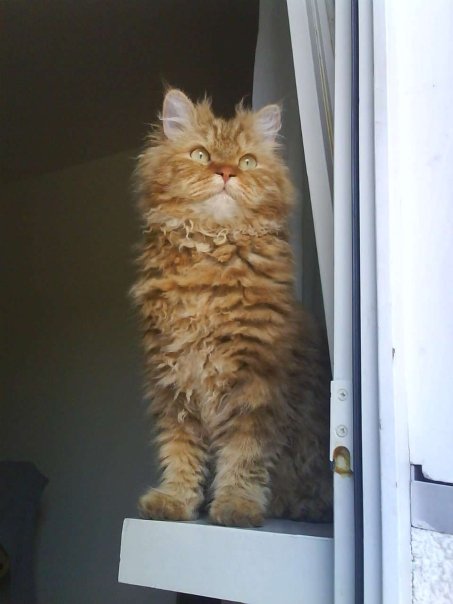
The Selkirk Rex is a curly-coated breed developed in the United States in the late 1980s. What sets it apart from the other rex breeds is the thickness of its coat: the Devon Rex, Cornish Rex and LaPerm have sparser curls. It is known for a placid, sociable and cuddly nature.
History
The breed began in Montana in 1987, in a litter born to a rescued cat. One kitten had an unusual coat and ended up with the breeder Jeri Newman, who called her Miss DiPesto after a curly-haired character in the television series Moonlighting. Mated to a black Persian, Miss DiPesto had three curly and three straight-haired kittens, which showed that the curl is a dominant trait. Every Selkirk Rex descends from her.
Newman named the breed after her stepfather, Selkirk, which makes it the only cat breed named after a real person.
American Shorthairs, Persians, Himalayans, Exotic Shorthairs and British Shorthairs were used as outcrosses. The International Cat Association accepted the breed in 1992, the American Cat Fanciers Association in 1998 and the Cat Fanciers’ Association in 2000. The CFA stopped Persian outcrosses in 2020 and the remaining ones in 2025, so kittens registered with it must now have two Selkirk Rex parents. TICA still permits several outcross breeds.
Appearance
The Selkirk Rex is a medium to large cat, solid and muscular with heavy bones. Males weigh 5.4 to 6.8 kg (12 to 15 lb) and females somewhat less. The head is round with full cheeks, round eyes set well apart and medium-sized ears.
There are shorthaired and longhaired varieties. The curls are loose and random and show most around the neck, tail and belly. A shorthaired cat’s coat is the same length all over; a longhaired cat has a longer ruff and tail. The whiskers are curly and brittle and tend to break. All colors are accepted.
Cats with one copy of the gene have the full, randomly curled coat. Those with two copies have a tighter, softer wave, more like a Cornish Rex, along with a slimmer body, larger ears and a less rounded head.
Care and health
No health problems are known to be particular to the breed. Curly hair inside the ear can irritate it and lead to more ear wax. Cats with two copies of the curl gene may have a greasy coat that needs bathing more often. Because the Selkirk Rex has a full coat, it is not suggested for people allergic to cats.
Conditions can come in from the outcross breeds, including polycystic kidney disease from Persians and hypertrophic cardiomyopathy from British Shorthairs. In the United Kingdom, breeding cats registered with the Governing Council of the Cat Fancy are tested for polycystic kidney disease or come from two tested parents.
Facts on this page were checked against Wikipedia and may have changed since.