Cat breedsRex and curly-coated
Devon Rex

- Origin
- England
- Type
- Rex and curly-coated
- Size
- Medium
- Coat
- Very short, dense and soft, with a wave or ripple
- Colors
- Any color
- Status
- Recognised by the CFA, TICA, FIFe and GCCF
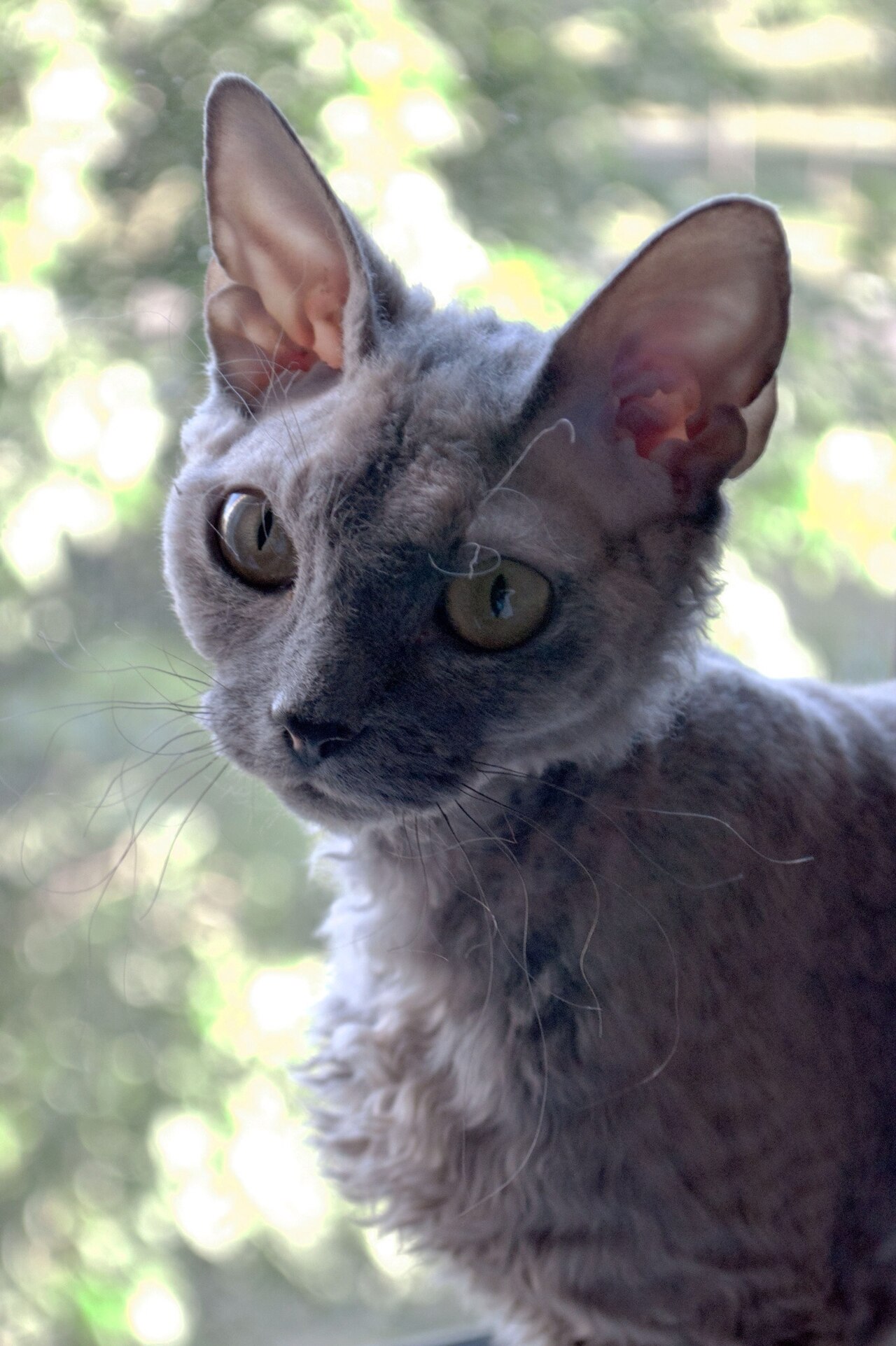
The Devon Rex is a short-haired English breed with tall ears, large eyes and a soft, wavy coat. Its short, broad head gives it a look often called pixie-like. The breed goes back to a single curly-coated kitten found in Devon.
History
In 1960 Beryl Cox came across a kitten with a curly coat in Buckfastleigh, Devon, and named him Kirlee. She assumed at first that his coat was caused by the same gene as that of the Cornish Rex, and so Kirlee was mated to Cornish Rex cats. The kittens were all born with straight coats, which showed that Kirlee carried a different mutation. Cox then set up a breeding program to preserve it.
Appearance
The Devon Rex is a cat of medium build. The head is short and forms a broad wedge, with the brow curving back to a flat skull. The eyes are large, oval and set wide apart, and may be any color. The ears are large, wide-set and rounded at the tips.
The coat is very short, dense and soft. The hairs curl inward, which gives the coat a waved or rippled look. On some parts of the body, such as the neck, there may be too little fur for the wave to show. The whiskers and eyebrows are crinkled and twisted. Any coat color is allowed.
Care and health
A hereditary myopathy, a muscle disease, occurs in some Devon Rexes. It is caused by a variant of the COLQ gene and shows up between 3 and 23 weeks of age. It sometimes stabilizes, but more often it gets worse, and affected cats die from laryngospasm after food blocks the larynx.
A study of past cases found the breed predisposed to feline atopic dermatitis. The Devon Rex is also predisposed to congenital hypotrichosis, a lack of hair from birth, and to Malassezia dermatitis.
Facts on this page were checked against Wikipedia and may have changed since.