Serengeti

- Origin
- United States
- Type
- Domestic hybrid
- Size
- Medium
- Weight
- 4–7 kg (8–15 lb)
- Colors
- Black-spotted tabby on tan, beige or gold; silver; solid black; smoke
- Status
- Recognised by TICA
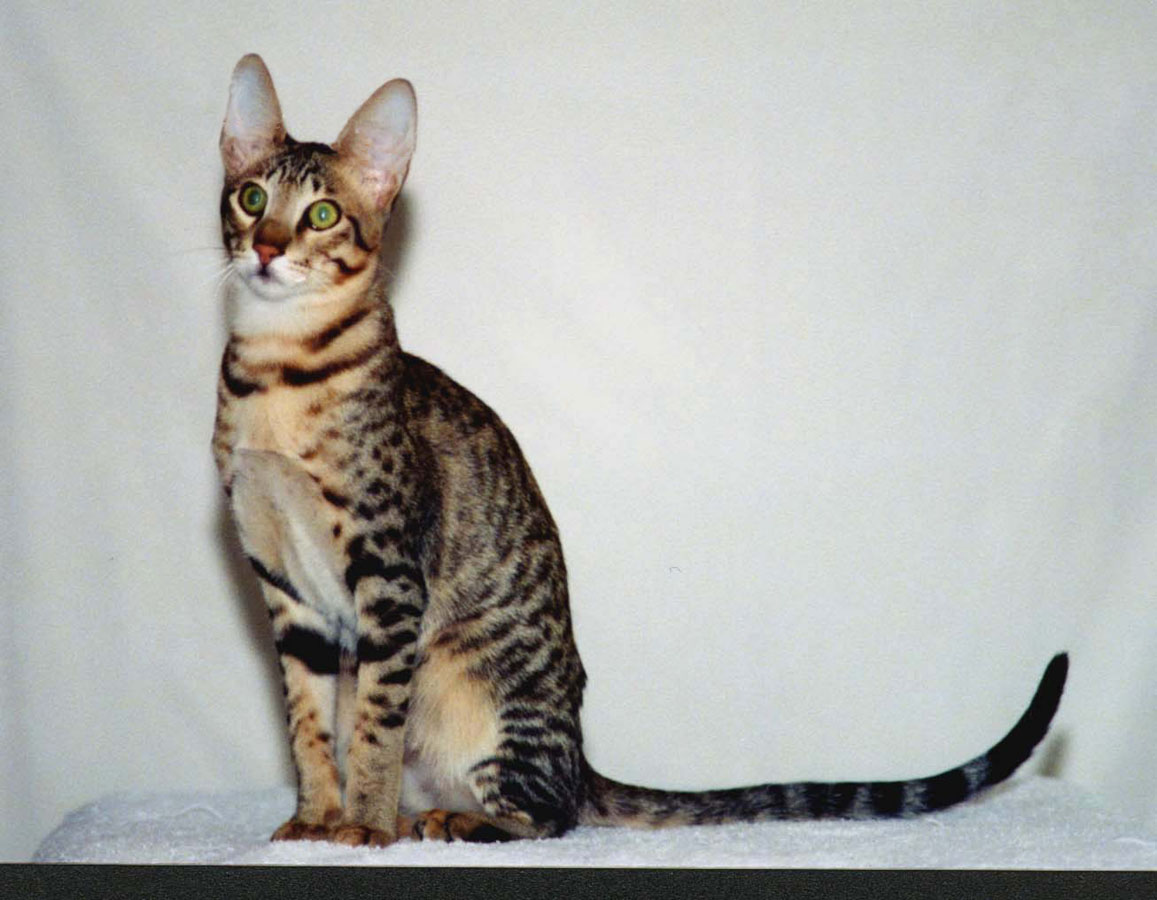
The Serengeti is a spotted domestic cat first produced by crossing a Bengal with an Oriental Shorthair. It counts as a hybrid breed because the Bengal itself descends from crosses between house cats and the wild Asian leopard cat. The goal is a cat that looks like a serval without any recent wild blood.
History
The breed was created in 1994 by Karen Sausman, a biologist, at her Kingsmark Cattery in California. It is still being developed. The Bengals used in Serengeti breeding are generally many generations away from their wild ancestors and carry little from them beyond the genes that affect coat color. The first foundation Serengeti came from the Bengal and Oriental cross, and breeders have worked from there toward the registered breed profile.
The International Cat Association recognises and registers the Serengeti.
Appearance
Serengetis are spotted cats with long legs and very large ears that are rounded at the tips. The neck is long and joins the base of the skull without narrowing. Males are usually a little bigger and heavier than females, weighing 5 to 7 kg (10 to 15 lb), while females weigh 4 to 5 kg (8 to 12 lb).
The coat comes in black tabby, which TICA calls ebony, or solid black, each with or without silver or smoke. On tabby cats the spots are black or dark brown on a tan, light beige or gold background; silver cats have black spots on a silver ground. Faint “ghost” spots can sometimes be seen on the solid black cats.
Care and health
Serengetis are generally healthy. Urinary crystals are among the few problems noted in the breed.
Facts on this page were checked against Wikipedia and may have changed since.