Caracat
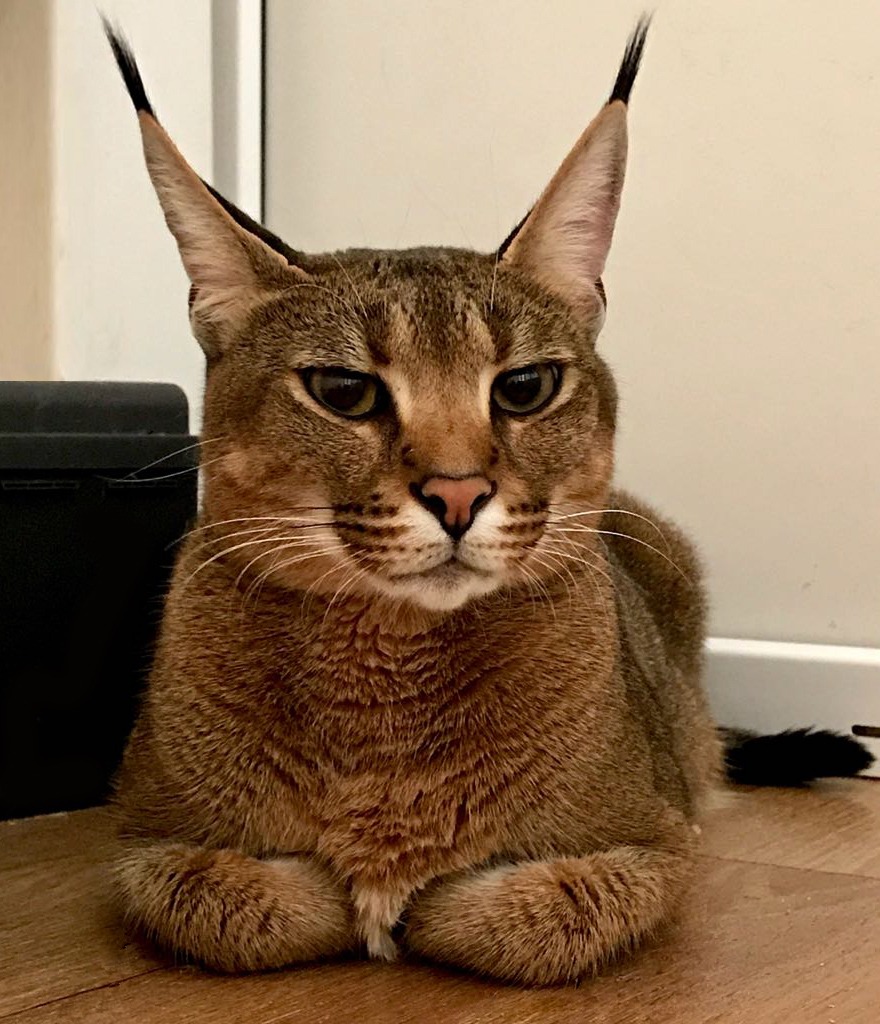

- Type
- Domestic hybrid
- Size
- Large
- Coat
- Short, with black-tipped ear tufts
- Colors
- Warm reddish brown, lighter on the chest and belly
The Caracat is a hybrid, not a natural breed: it comes from crossing a wild caracal (Caracal caracal) with a domestic cat, most often an Abyssinian.
History
The first recorded cross was an accident. In 1998 a domestic cat got into the enclosure of a male caracal at the Moscow Zoo, and the two mated. Planned breeding came later. In the early 2000s Joy Geisinger in the United States paired a tame male caracal with Abyssinian females and produced the first intended litter.
In 2010 Patrick Rühl and a group of German and Austrian breeders founded the International Foundation for Wild and Hybrid Cats. They tried crossing caracals with Maine Coons, whose pregnancies are closer in length to the caracal’s. The group fell into disagreement and its website went offline in 2011. In Russia, Irina Nazarova set up the first cattery devoted to the Caracat and had her first litters in 2014. The Ukrainian felinologist Ganna Kuzmina was the first to produce fertile fifth-generation (F5) males.
Appearance
Caracats are large, solid cats with long legs, expressive eyes and prominent black-tipped tufts on the ears. The usual coat is a warm reddish brown with a paler chest and belly. With each generation further from the caracal, the size and the ear tufts become less marked, though breeders try to hold on to the look while improving temperament.
Temperament
First-generation (F1) Caracats attach strongly to the one person who looks after them and are wary of strangers. Early handling, such as bottle-feeding from a young age, is considered important for them to tolerate people at all. By the fifth generation the cats behave much more like ordinary house cats.
Care and health
A caracal’s pregnancy lasts about 15 days longer than a domestic cat’s. The mismatch can produce premature or oversized kittens. F1 Caracats also have a shorter digestive tract, more specialized for meat, and do poorly on commercial dry food; F5 cats cope much better with standard diets.
Because it carries wild caracal genes, the Caracat falls under the same legal restrictions as other wild-cat hybrids such as the Savannah and the Chausie.
Facts on this page were checked against Wikipedia and may have changed since.