Pantanal Cat
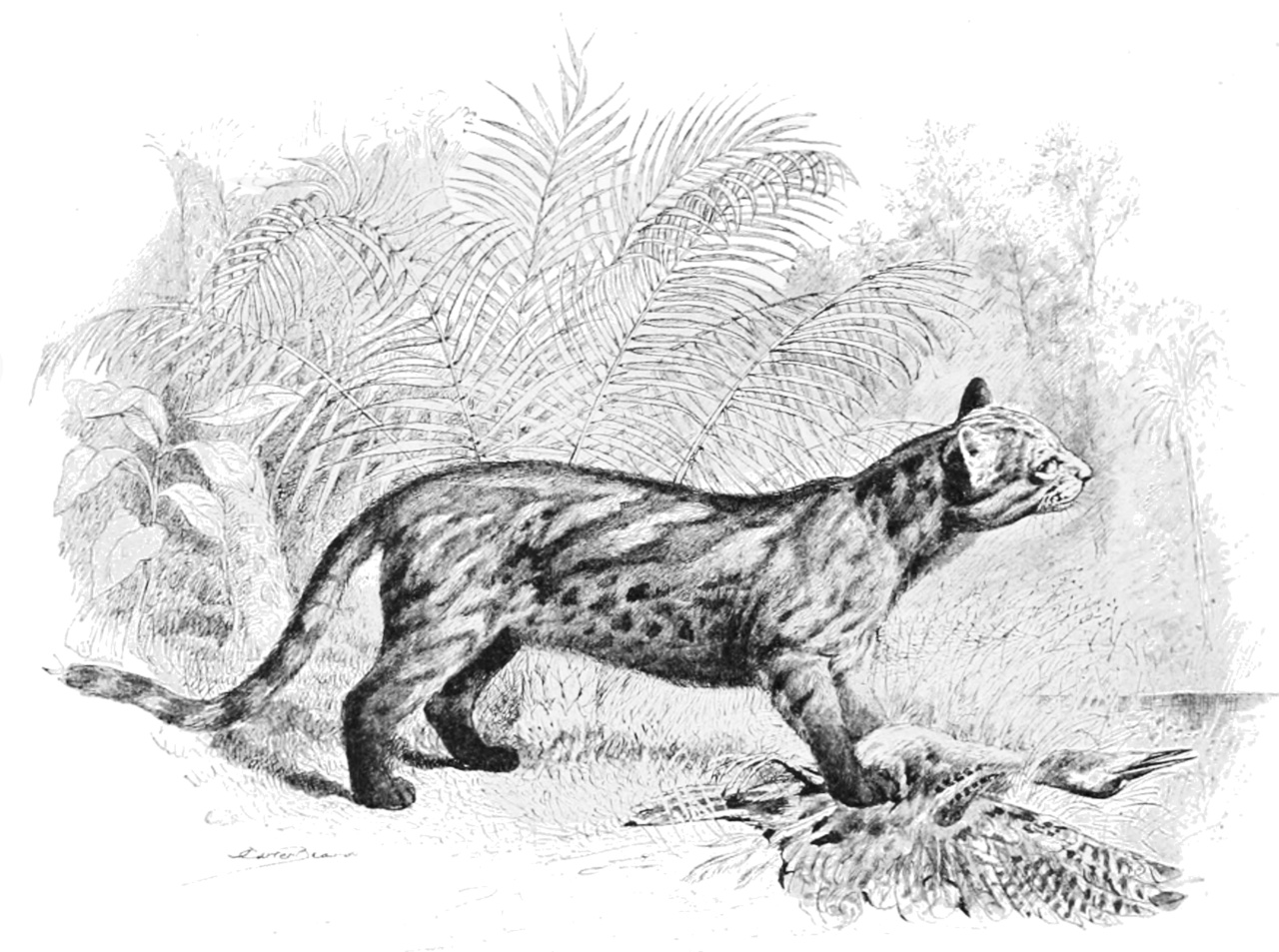

- Origin
- South America
- Type
- Wild cat
- Colors
- Brown agouti with dark rosettes on the flanks, striped legs, black feet and tail tip
The Pantanal cat (Leopardus colocola braccatus) is a small wild cat of central South America, about the size of a house cat. It is named after the Pantanal wetlands, though it lives mostly in grassland, scrub, savanna and dry forest. Scientists disagree on whether it is a form of the Pampas cat or a species in its own right.
Range and habitat
Pantanal cats are found in east-central Brazil, Uruguay and the neighboring parts of Bolivia, Paraguay and Argentina, from sea level up to 2,000 m (6,600 ft). Within that area they use a range of country, from open grassland to dense and dry forest. They have also been seen on farmland, so they can put up with some human disturbance.
Appearance
The back is brown agouti, with a slightly darker crest along the spine. Two dark lines cross each cheek. The ears are reddish at the base and creamy white on the outside, edged with a black band. The throat is whitish, shading to orange on the sides and belly. Dark brown rosettes mark the flanks, stripes run across the legs between elbow and wrist, and the feet and the tip of the tail are black.
One all-black animal has been reported from the wild in Brazil, and black individuals have also been seen in captivity.
Behavior
The Pantanal cat lives alone and is active by day. It hunts small mammals such as cavies, birds that live on the ground, small lizards and snakes. Home ranges measure between 3 and 37 square kilometers (1.2 and 14.3 sq mi).
Hybrids between the Pantanal cat and the oncilla are known from Brazil.
Classification
In 1994 it was proposed that the cat’s coat color, pattern and skull measurements were distinct enough to make it a separate species. A genetic study did not support this, though that study has itself been questioned. In 2017 the IUCN’s cat specialists treated it as a subspecies of the Pampas cat. A study in 2020 again raised it to a full species, on the basis of its form, genetics, range and ecology.
Facts on this page were checked against Wikipedia and may have changed since.