Bobcat
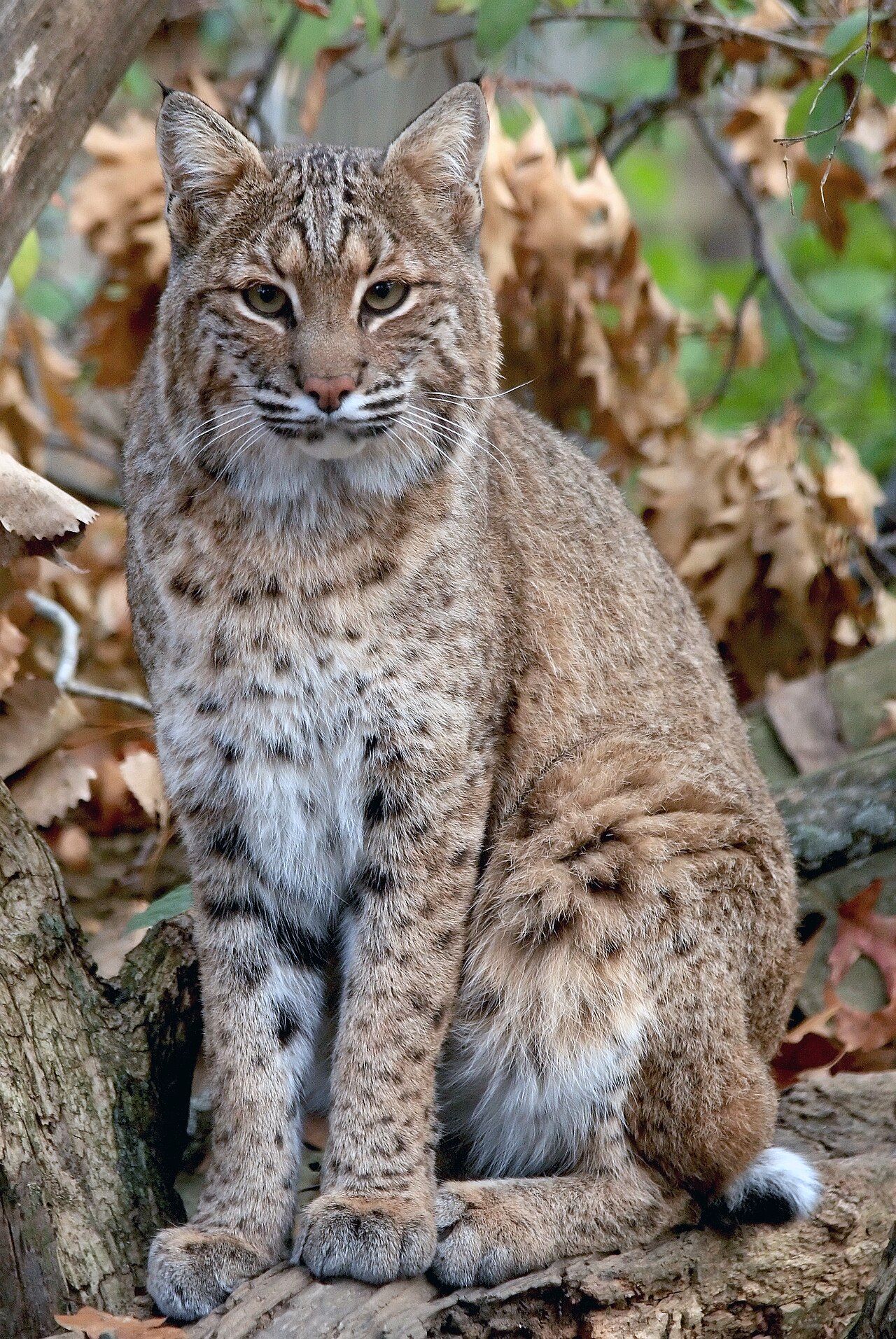

- Origin
- North America
- Type
- Wild cat
- Height
- 30–60 cm (12–24 in)
- Weight
- 4–18.3 kg (8.8–40 lb)
- Coat
- Tan to grayish-brown with black streaks and spots
- Life span
- About 7 years in the wild
- Status
- Least Concern (IUCN)
The bobcat (Lynx rufus) is a medium-sized wild cat native to North America and one of the four living species of lynx. It takes its name from its short, “bobbed” tail. It is thought to descend from Eurasian lynx that crossed the Bering land bridge, and two subspecies are recognised today, one east and one west of the Great Plains.
Range and habitat
Bobcats live from southern Canada through most of the contiguous United States to Oaxaca in Mexico. They prefer woodland but are highly adaptable, and are also found in swamps, semidesert, rugged mountains and the edges of farmland and towns. Only large tracts of intensively farmed land seem to be unsuitable. During the 20th century the species lost ground in parts of the Midwest and Northeast, but by 2010 it had returned to many states and was present in every one of the contiguous 48 except Delaware.
In Canada its spread is limited by deep snow, which it handles poorly because it lacks the large padded feet of the Canada lynx. The bobcat has been listed as Least Concern on the IUCN Red List since 2002. It has been hunted heavily for sport and fur, yet its numbers have stayed stable overall, with declines in some areas.
Appearance
The bobcat is on average the smallest lynx. Its coat varies but is usually tan to grayish-brown, with black streaks on the body, dark bars on the forelegs and off-white underparts. The ears are pointed and black-tipped with short tufts, and ruffs of longer hair below them make the face look wide. The eyes are yellow. Bobcats of the southwestern deserts are the palest and those of northern forests the darkest; a few black individuals have been recorded in Florida and New Brunswick.
Adults stand about 30 to 60 cm (12 to 24 in) at the shoulder, with a tail of 9 to 20 cm (3.5 to 7.9 in). Males weigh 6.4 to 18.3 kg (14 to 40 lb) and average 9.6 kg (21 lb); females weigh 4 to 15.3 kg (8.8 to 33.7 lb) and average 6.8 kg (15 lb). The largest animals come from eastern Canada and northern New England.
Behavior
Bobcats are most active around dusk and dawn, covering 3 to 11 km (2 to 7 mi) a night along a regular route. They are solitary and territorial, marking their ranges with urine, feces and claw marks on trees, and keep a main den plus several other shelters such as hollow logs, thickets and rock ledges. They climb well and can swim, though they usually avoid water.
Rabbits and hares are the preferred prey, but bobcats also take rodents, birds, insects and even deer, depending on the place and season. They breed from winter into spring. After about 60 to 70 days, usually two to four kittens are born in April or May. The average lifespan is seven years; the oldest known wild bobcat reached 16 and the oldest in captivity 32.
Facts on this page were checked against Wikipedia and may have changed since.