Iberian Lynx
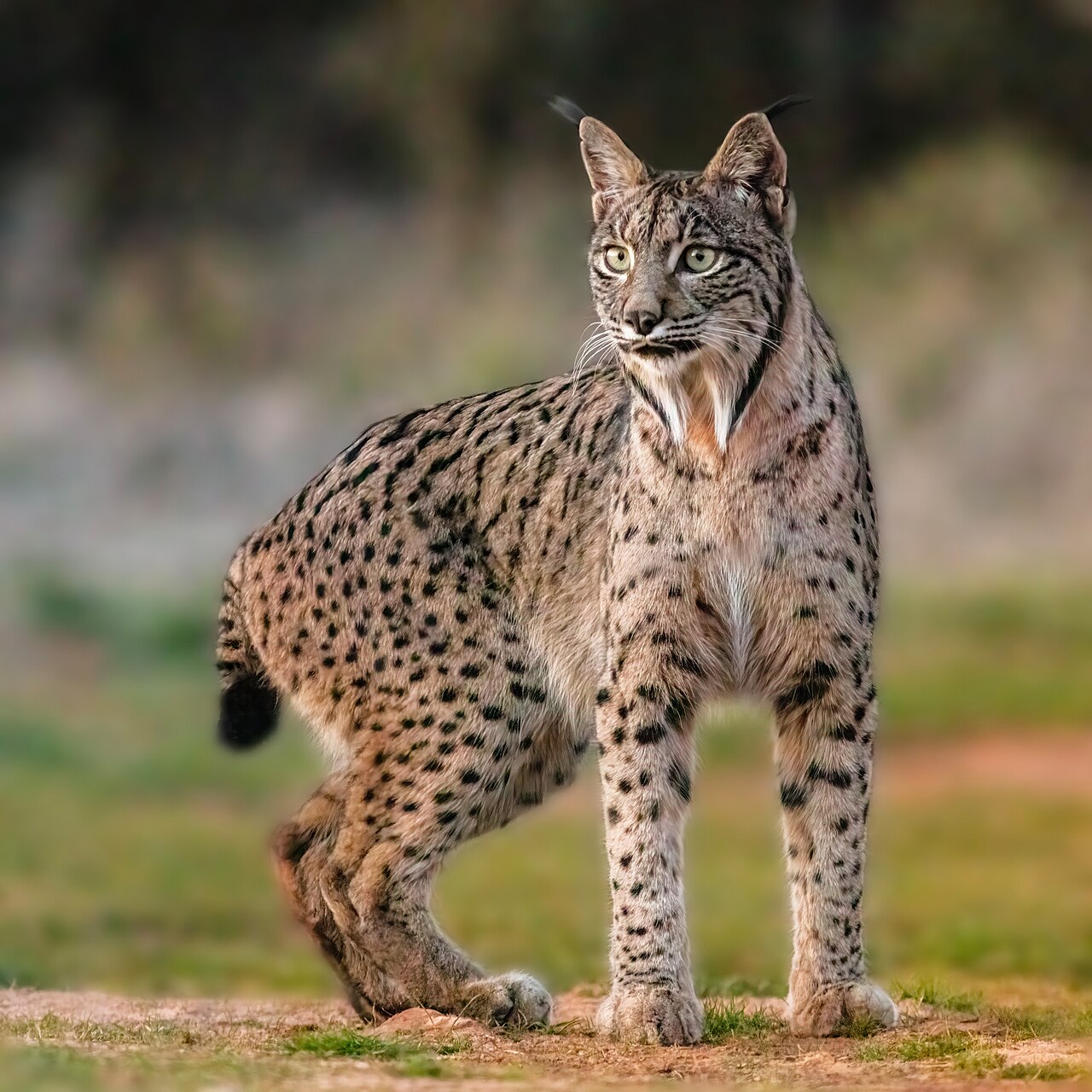

- Origin
- Iberian Peninsula
- Type
- Wild cat
- Weight
- 7–15.9 kg (15–35 lb)
- Coat
- Short and spotted
- Colors
- Bright yellowish to tawny with brown to blackish spots
- Life span
- Up to 13 years in the wild
- Status
- Vulnerable (IUCN)
The Iberian lynx (Lynx pardinus) is one of the four living species of lynx and is found only on the Iberian Peninsula. Fossils show it has lived there for about a million years. At the start of this century it was close to extinction, and its recovery since then is one of the best-known successes in cat conservation.
Range and habitat
The lynx once lived across the whole peninsula. Its numbers fell through the 20th century, from 15 separate populations in the 1940s to two by the early 1990s, and between the early 1960s and 2000 it lost about 80 percent of its range. In 2002 only 94 animals were left, in two isolated groups in Andalusia: the Sierra Morena and the coastal plains of Doñana.
Releases and natural spread have since returned it to the Montes de Toledo, Extremadura, Castilla–La Mancha and the Guadiana Valley in Portugal. Counts in 2024 put the population above 2,000, most of it in Spain and several hundred in Portugal.
Appearance
The Iberian lynx has a small head with tufted ears and a ruff of fur around the face, a short body, long legs and a short tail. Its fur is short and bright yellowish to tawny, covered in spots that run in lines and get smaller from the back toward the sides. Lynxes in the Sierra Morena tend to have many very small spots, and those in Doñana fewer and larger ones.
Males measure about 75 to 82 cm (29 to 32 in) in head and body length, with a tail of 12.5 to 16 cm, and weigh 7 to 15.9 kg. Females are smaller, at roughly 68 to 78 cm and 9 to 10 kg. White animals have been recorded twice.
Behavior
Adults hold stable home ranges for years and mark them with urine, droppings and scratches on tree bark. In one study in the Sierra Morena, females used 5.2 to 6.6 square kilometers and males about 12.
The lynx depends on the European rabbit, which makes up about three quarters of its food. A male needs about one rabbit a day, and a female with kittens three. It also takes red-legged partridges, rodents, ducks and now and then young deer or mouflon, and it often kills smaller carnivores such as foxes, mongooses and genets.
Kittens become independent at 7 to 10 months but stay with their mother until about 20 months. Young animals seldom breed until a territory falls vacant.
Threats and conservation
The decline was caused by overhunting, poaching, broken-up habitat and two rabbit diseases, myxomatosis and rabbit hemorrhagic disease, which wiped out much of the prey. Until the late 1970s the lynx could be legally killed as vermin. Today roads are the main killer, with 144 lynxes run over in 2023, and illegal hunting continues. The species also has very low genetic diversity, and inbreeding reduces fertility.
The lynx is fully protected and listed on CITES Appendix I. Conservation has meant restoring habitat, restocking rabbits, moving animals between areas and releasing lynxes bred in centers in Spain and Portugal; the first captive litter was born in 2005. In 2024 the IUCN moved the species to Vulnerable.
Facts on this page were checked against Wikipedia and may have changed since.