Bornean Clouded Leopard

- Origin
- Borneo
- Type
- Big cat
- Status
- Vulnerable (IUCN)
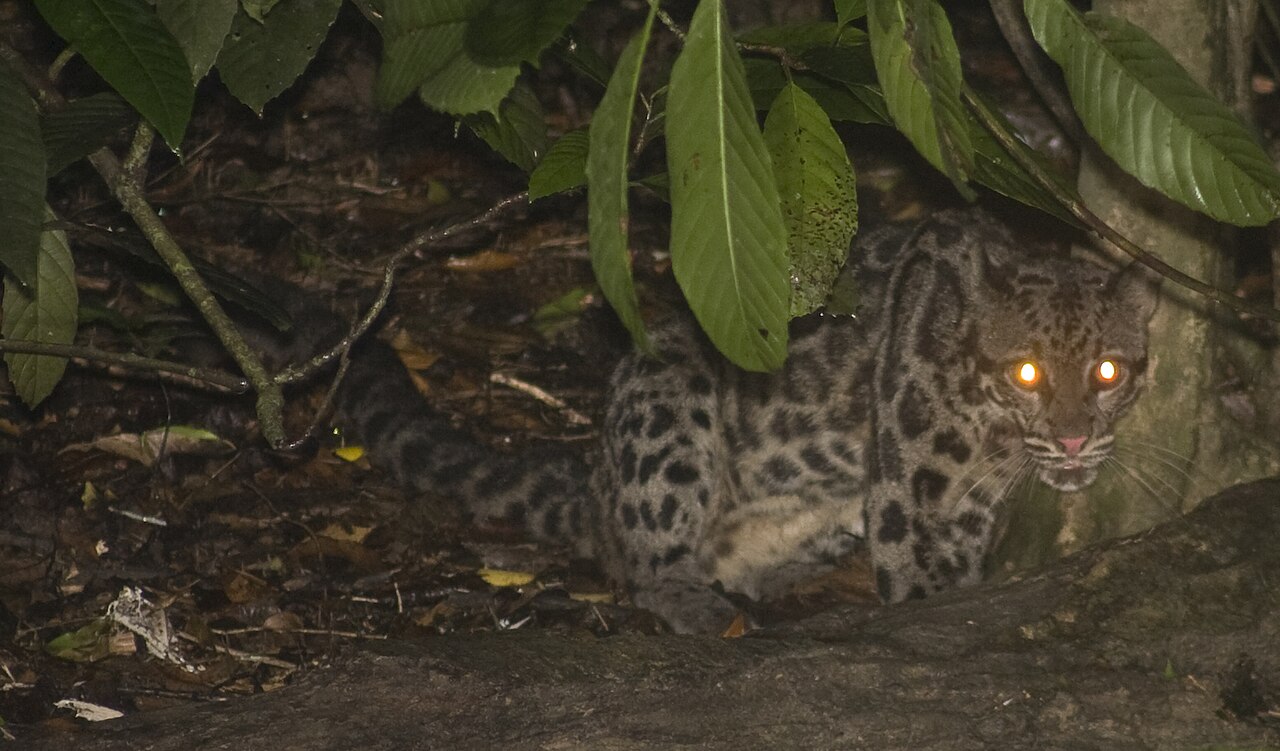
The Bornean clouded leopard (Neofelis diardi borneensis) is one of the two subspecies of the Sunda clouded leopard. It lives only on the island of Borneo. It differs from its relative on Sumatra in the shape and number of its spots and in details of the skull, jaw and teeth.
Range and habitat
The cat has been recorded in all three parts of Borneo where surveys are reported. In Kalimantan it is known from Sabangau National Park. In northern Sarawak it was found in mixed dipterocarp forest outside any protected area, at 1,000 to 1,215 m (3,281 to 3,986 ft). In Sabah it has been recorded in the Danum Valley Conservation Area, the Ulu Segama, Malua and Kabili-Sepilok forest reserves, Tabin Wildlife Reserve and the Lower Kinabatangan Wildlife Sanctuary.
Behavior
Camera-trap surveys show that the Bornean clouded leopard is largely active at night. One female fitted with a radio collar used a home range of about 23 km² (8.9 sq mi) over 109 days.
Evolution
The Bornean and Sumatran clouded leopards are thought to have separated in the Late Pleistocene, between 400,000 and 120,000 years ago. Low sea levels had exposed land bridges between the islands and the mainland; when the sea rose again, the Bornean cats were cut off. A 2007 genetic study found enough difference between the two island populations to name them as separate subspecies, and the Cat Specialist Group’s classification task force accepted that division in 2017.
Threats
The subspecies is considered vulnerable. Deforestation, poaching and hunting all put pressure on it. In Sabah, most habitat loss comes from the spread of oil palm plantations, which cut the forest into pieces and keep leopard populations from mixing. Deforestation across Borneo has greatly reduced both the links between areas of habitat and the number of animals.
Facts on this page were checked against Wikipedia and may have changed since.