Cat breedsType or coat pattern
Tabby cat

- Type
- Type or coat pattern
- Coat
- Striped, blotched, spotted or ticked, with an M on the forehead
- Colors
- Many, including brown, gray and orange (ginger)
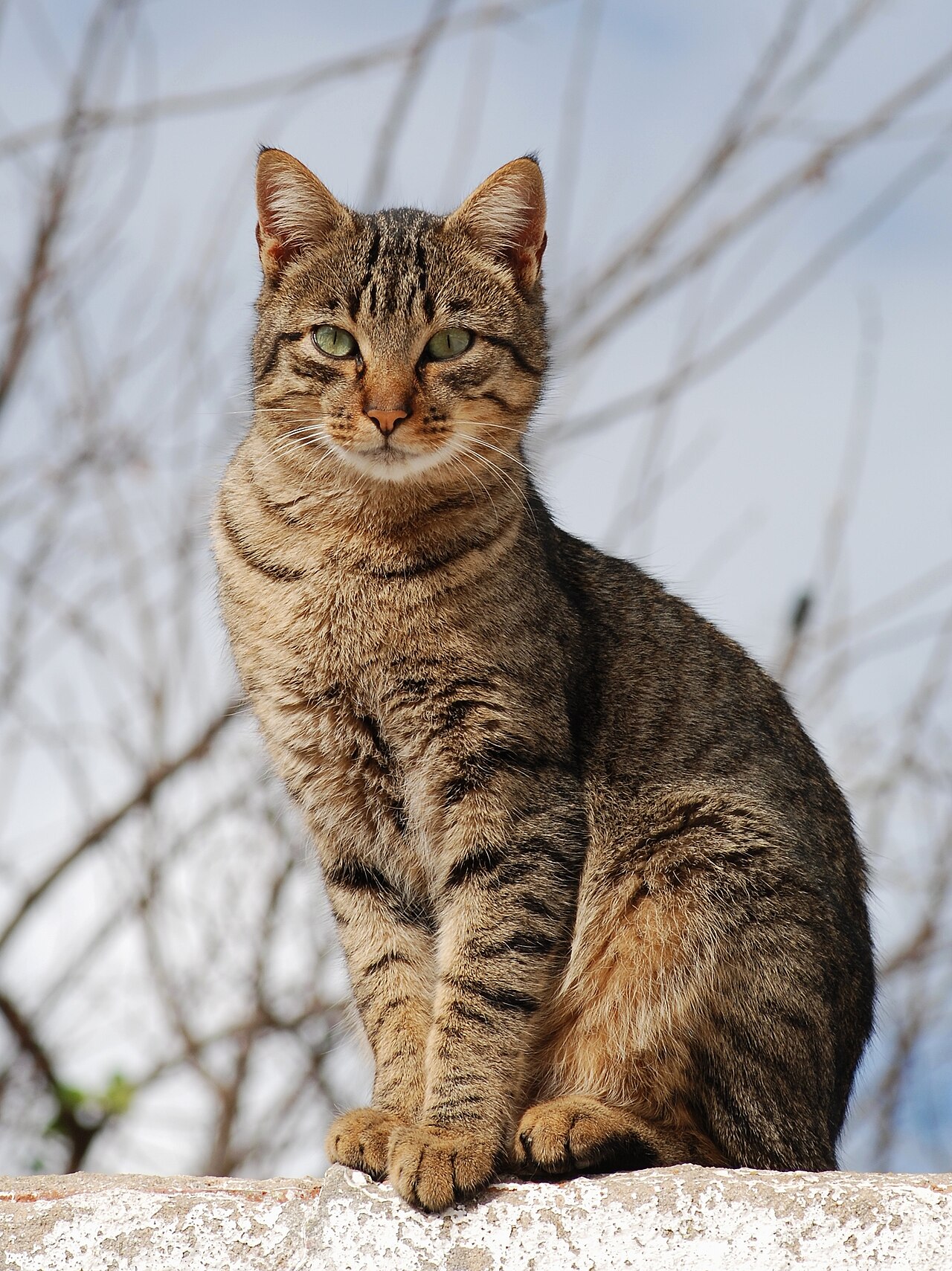
A tabby is any domestic cat with a particular kind of coat pattern: an M-shaped mark on the forehead, lines beside the eyes and across the cheeks, and stripes, swirls, spots or flecks on the body, legs and tail. Tabby is a pattern, not a breed. It is common in non-pedigree cats everywhere and appears in many breeds. It is also the pattern of the domestic cat’s wild ancestor, the African wildcat, and of its relatives the European and Asiatic wildcats.
History
The word first meant a striped silk taffeta. It came into English through French from the Arabic name of the Attabiya district of Baghdad, which was known for striped cloth. “Tabby cat” was in use for a striped cat by the 1690s and had been shortened to “tabby” by 1774.
Most medieval drawings and paintings of cats show tabbies. Even so, the 17th-century writer John Aubrey claimed that the common English cat of his youth had been white with bluish-gray patches, and that tabbies, which he called Cyprus cats, were newcomers.
Appearance
There are four basic tabby patterns.
The mackerel tabby has narrow stripes running down the sides, either unbroken or split into bars and short segments. It is the most common pattern.
The classic or blotched tabby has broad, curving bands that form whorls, with a bullseye on each side, a pale butterfly shape over the shoulders and three stripes along the spine.
The spotted tabby has spots in place of stripes, thought to be the work of a gene that breaks up the mackerel or classic pattern. It is seen in the Egyptian Mau, Ocicat, Bengal and other breeds.
The ticked tabby has hairs banded with several colors, which gives a sandy, salt-and-pepper coat with few or no stripes on the body. Faint barring often remains on the legs, face and tail.
A fifth, patched form combines any of these with tortoiseshell or calico markings; such cats are called torbies and calibies. The rosettes and marbling of the Bengal are rarer patterns that come from wild genes.
Orange, red or ginger tabbies are a color version of the same patterns. Because the orange gene sits on the X chromosome, about three out of four ginger cats are male. Orange fur always shows tabby markings, even on a tortoiseshell.
Whether a cat shows its tabby pattern at all depends on the agouti gene. Solid black or blue cats have two copies of the non-agouti form, which hides the pattern, though faint “ghost” stripes can sometimes be seen in bright light, especially on kittens.
Temperament
Personality varies widely from cat to cat and depends on many things. A 2015 survey study at the University of California, Davis, looked for links between coat color and aggression and found only minor differences between coats. Another study found no link between pattern and behavior and suggested that people see what they expect to see, such as friendliness in orange cats.
Facts on this page were checked against Wikipedia and may have changed since.