European Shorthair

- Origin
- Sweden
- Type
- Shorthair
- Size
- Medium
- Coat
- Short, dense and glossy
- Colors
- All natural Western colors, with or without tabby, tortoiseshell, silver or white
- Status
- Recognised by FIFe and the WCF; registration only with TICA
The European Shorthair, also known simply as the European or the Celtic Shorthair, is a pedigree breed meant to look like the everyday domestic cats of Europe. Because of that, its name is often used wrongly for ordinary non-pedigree cats, which causes a good deal of confusion.
History
For a long time the British Shorthair filled the role of the pedigree cat that stood for Europe’s original house cats, even though it was stockier than most of them. The British Shorthair was also crossed with Persians and bred toward a cobbier body, a shorter muzzle and a thicker coat. The British breed was itself called European Shorthair in those years, which puzzled Scandinavian breeders, whose cats looked different.
FIFe recognised the European Shorthair in 1949, and the oldest cat registered there is said to have been born in 1940. Both types were still judged to one standard until 1982, when FIFe registered the Scandinavian type as a breed of its own with a separate standard. The breed has counterparts in the British Shorthair and the American Shorthair, both of which have been bred for longer.
As of 2023 it is recognised by FIFe, the WCF, the French LOOF and the Australian Cat Federation, and by TICA for registration only. It is most popular in Scandinavia and also in Germany. It is the national cat of Finland and is on the list of endangered breeds in Sweden.
Appearance
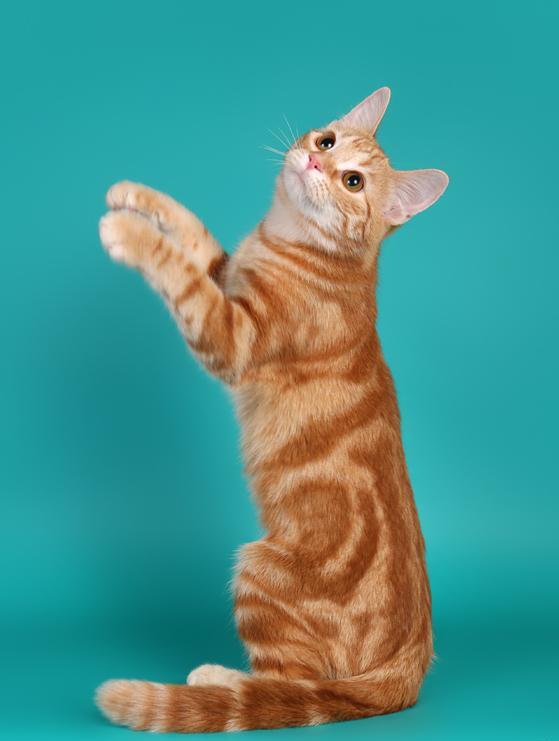
The European Shorthair looks like a domestic shorthair: medium-sized and muscular, with a well-rounded face and well-developed cheekbones. The ears are medium-sized and slightly rounded at the tips. The eyes are round and open. The neck is muscular and of medium length, and the tail is medium-long, thick at the base and rounded at the tip.
The coat is short, dense and glossy. All the natural Western colors are allowed, such as black, blue, red and cream, with or without tabby, tortoiseshell, silver or white markings. Solid white is allowed too. FIFe does not accept tabby with white or smoke with white. Eye color goes with the coat and may be yellow, green or orange. White cats may have blue or odd eyes.
Temperament
The breed comes from Europe’s natural mouse-hunting cats. Most European Shorthairs are strong and active, and generally friendly with people of all ages. They get along with other cats and put up well with dogs. They are intelligent and playful, and most are good at keeping a house and garden free of rodents.
Care and health
In a review of more than 5,000 cases of urate bladder stones in the United States, the European Shorthair had the highest rate of the condition of any breed.
Facts on this page were checked against Wikipedia and may have changed since.