Arabian Mau

- Origin
- Arabian Peninsula
- Type
- Shorthair
- Size
- Medium
- Coat
- Short, close-lying, no undercoat
- Colors
- Various; red, white, black and brown tabby are the best known
- Status
- Recognised by the WCF
The Arabian Mau is a short-haired cat native to the Arabian Peninsula. It began as a landrace, a natural population with distant roots in the African wildcat, and was later written up as a formal breed.
History
Cats of this kind have lived across the peninsula, in Saudi Arabia, Kuwait, Qatar, Oman, Bahrain and the United Arab Emirates, for over 1,000 years. As desert cats they are well suited to heat and dry air.
The breed standard was not designed around an ideal; it describes what the cats of the region already look like and how they behave. The World Cat Federation approved the Arabian Mau at its general meeting in Germany in August 2008, and the cats have been able to enter international shows since January 1, 2009. The Emirates Feline Federation recognises the breed as well.
Appearance
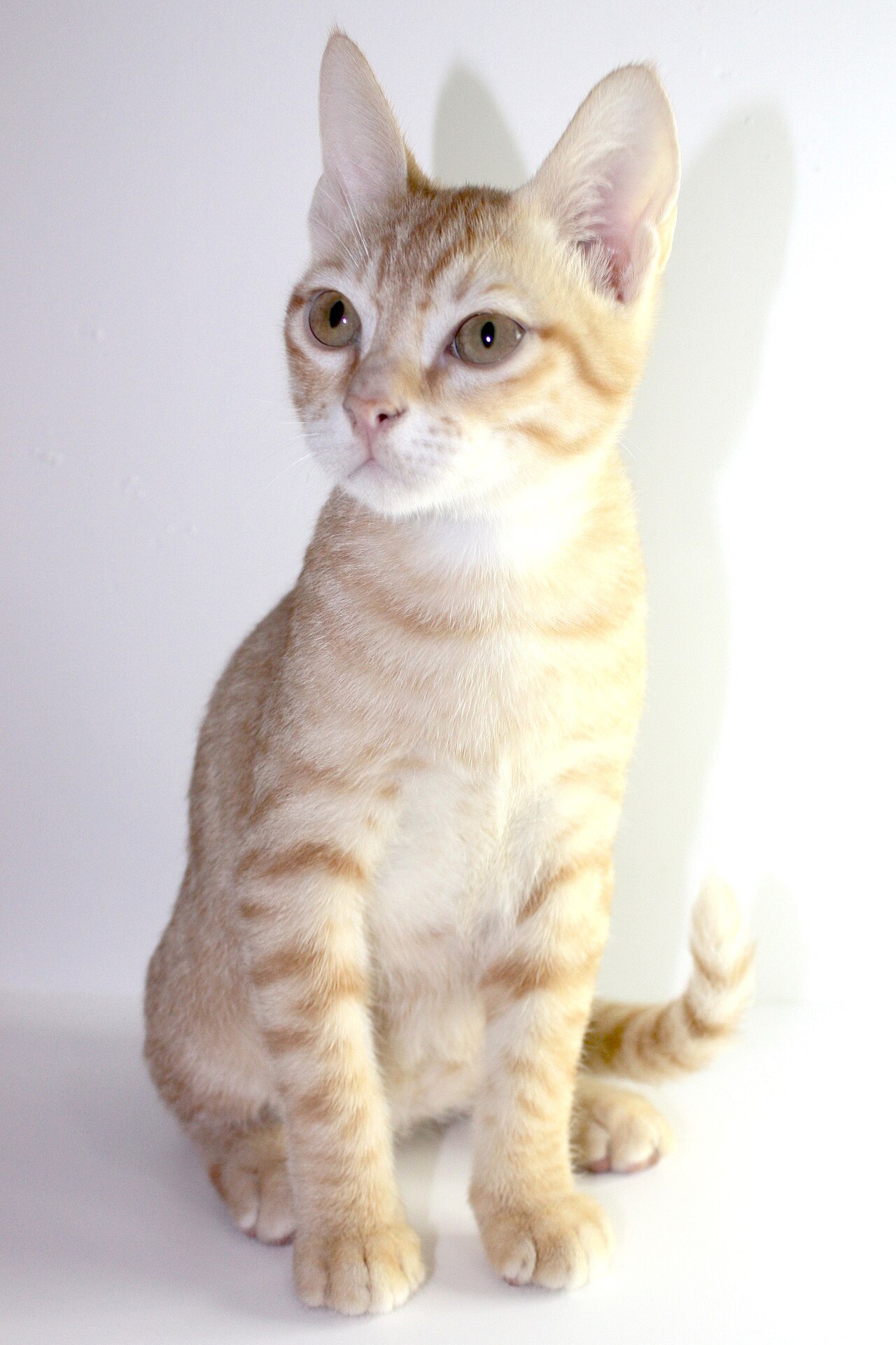
The Arabian Mau is a medium-sized cat with a firm, well-muscled body that is not especially slender. Females are medium-sized and elegant, while males can be a good deal larger. The legs are fairly long and end in oval paws, and the tail is of medium length and tapers toward the tip.
The head looks round but is slightly longer than it is wide, with clear whisker pads, a firm chin and a nose that dips slightly in profile. The ears are large and set high. The eyes are large, slightly oval and a little slanted; they can be any color, though bright green is the most usual.
The coat is short, lies flat against the body and has no undercoat. It should not feel silky. Many colors occur, and red, white, black and brown tabby are the best known.
Care and health
With no undercoat, the Arabian Mau sheds little and keeps itself tidy. Brushing is not always needed, but it lifts out dead hair and brings up the shine of the coat. The breed is not hypoallergenic, although its light shedding and low dander may trouble people with mild allergies less than other cats do.
Facts on this page were checked against Wikipedia and may have changed since.