Leopards – Meet the Felidae Family
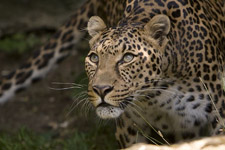
Image from BrianScott
Another introduction to the cat family, it’s time to meet the leopards who interestingly enough are not part of the leopardus genus, but of the panthera genus.
These big cats used to be found from the British Isles all the way to Japan, however today they are almost exclusively in Africa and small parts of Asia & Sri Lanka.
Perhaps the flashiest of the cat breeds, the leopard is definitely known for their stylishly spotted coat.
The leopard can survive in a wide variety of habitats from mountains to swamps.
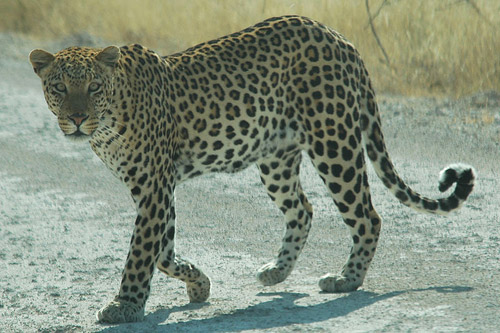
The African Leopard is found throughout Africa & physical characteristics change due to their local area. Found in a number of different habitats from grasslands to mountain forests, their preference being undisturbed rainforests.
Thus is the most common subspecies of leopard and in the least danger of extinction.
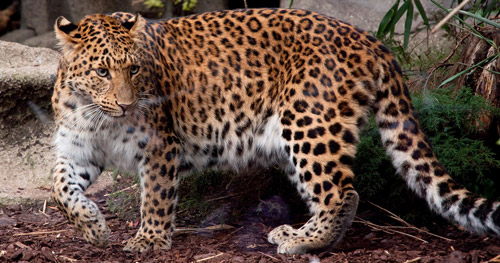
The Amur Leopard comes from eastern Russia and they are one of the rarest of the big cats on the planet. Their coat is distinct from the other members of this genus with a particularly pale background and large, dark rosettes.
There is an estimated 35-45 left in the wild, this magnificent cat is dangerously close to extinction.
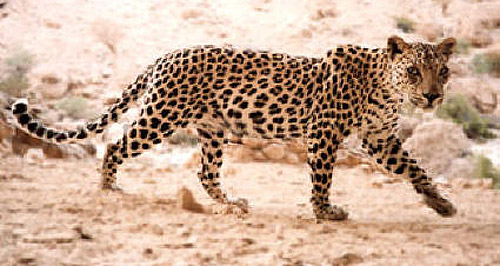
The Arabian Leopard is native to the arid terrain of the Arabian Peninsula & Israel. These animals cover wide territories due to the inhospitable landscape & do most of their hunting at dusk & dawn.
This is one of the most endangered of this genus, suffering from lack of available prey. They are critically endangered.
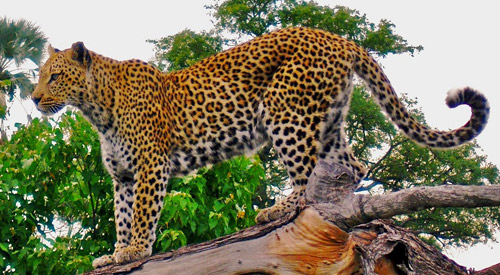
The Indian Leopard can be found throughout India, from Nepal to Bhutan to Bangladesh to southern China. This animal is the most successful of the Indian big cats, although they survive in a land ruled by larger predators than themselves.
This leopard is fairly stable in numbers from what we can tell, although they suffer from many of the same threats as their cousins.
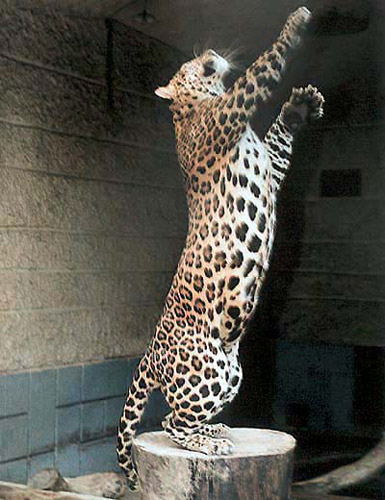
The Indo-Chinese Leopard lives in Thailand, Cambodia, Vietnam, Laos & Malaysia. These animals have been known to attack & kill people & often face hunting as retribution or for their fur. They are highly elusive & hunt at night, dragging their prey into the trees while they eat.
We had a difficult time finding information about the status of these cats, if anyone knows tell us so we can add it.
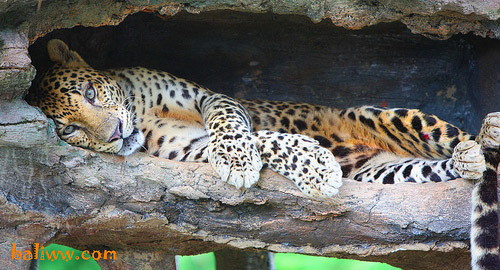
Only found on the island of Java, the Javan Leopard is smaller & very distinctive from the other members of the genus genetically. It is unsure when they broke off from the rest of the species and came to the island.
Hunted for their fur & confined to such a small territory, these animals are critically endangered & hanging on for dear life.
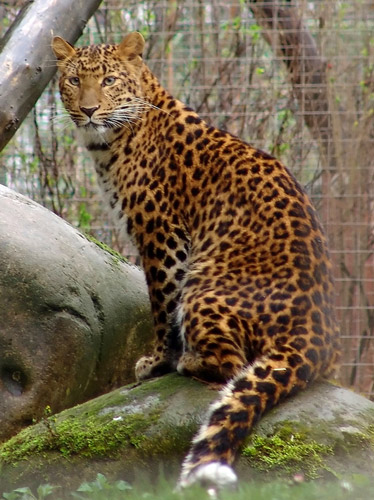
Fount in northern China, the North Chinese Leopard lives in highly fragmented ranges with a preference for forests & mountain meadows. They have the longest & darkest coat of all of the subspecies & their rosette pattern resembles that of a jaguar.
Another endangered member of this genus, the North Chinese leopard is so rare they are seldom seen in the wild at all & their numbers are unsure.
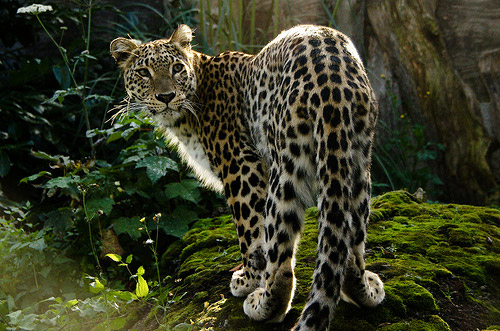
Also called the Iranian Leopard, the Persian Leopard is native to Iran, Azerbaijan, Turkey, Georgia, Turkmenistan, Uzbekistan, Pakistan, Taijkistan & Afghanistan, & cover a wide variety of territories. This is one of the largest subspecies and like the rest they are often hunted for their fur.
This animal is endangered and protected by international law. Their numbers are dangerously low & they are one of the species threatened by this war in its homeland.
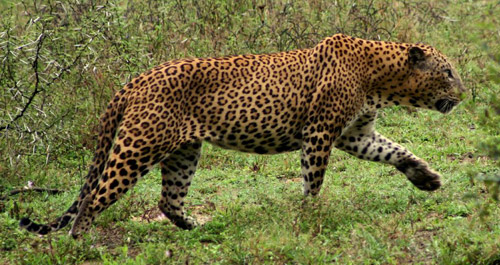
Sri Lankan Leopard is also called Kotiya and Puli, and they are native to Sri Lanka where they are the countries top predator. These animals are distributed throughout the island & their Yala National Park has the highest densities of leopards in the world.
Despite their seemingly widespread habitat, this subspecies is limited to one island. They are considered endangered & threatened by hunting, loss of habitat and persecution.
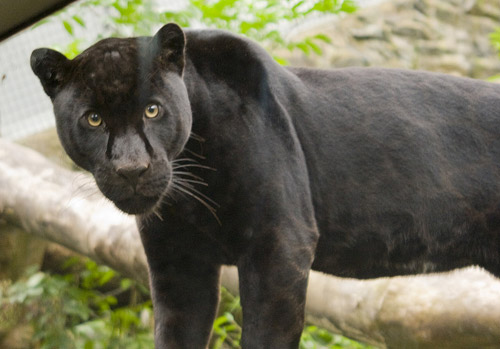
Panthers are not specifically one genus of cat, they occur in a couple of the big spotted cats found in dense jungle areas.
Have A Family Favorite?
It’s hard to pick one member of the cat family to love the most, the lions are so majestic, the tigers so intense, the leopards so beautiful. If you haven’t met them all, be sure to check them out.
The leapord is my most favorate animal in the whole wide world I love the patterns and it looks beutiful it is so amazing.
i luv leopards and thy are pretty i wish they werent endangered 🙁
i meant they r pretty
Why isn’t the snow leopard on this website??
Snow Leopards are not exactly Leopards since they aren’t is the Pardus family. They just look like Leopards
The Snow Leopard and the Clouded Leopard are not in the Pardus family so that is why it’s not on this webpage
the snow leopard is not actually a leopard.
Aww,I love leopards! They are so cute! Are these all the breeds? I am doing I science project and I need to pick a specific animal because we are going to make a rap for it!
are they really endangered??? 🙁
Yes,sorry
leopards <3 <3
i luv leopards!!!
leopards r so beautiful i would hav 1 myself if i could affored it! 🙂
The Snow Leopard is a Leopard from Southeastern Asia which is white with doughnut shaped spots which is very rare.
love you leopard
Clouded Leopard, all the way.
I adore amur leopards and snow leopards…..no one luvs leopards more than meeee