Turkish Angora
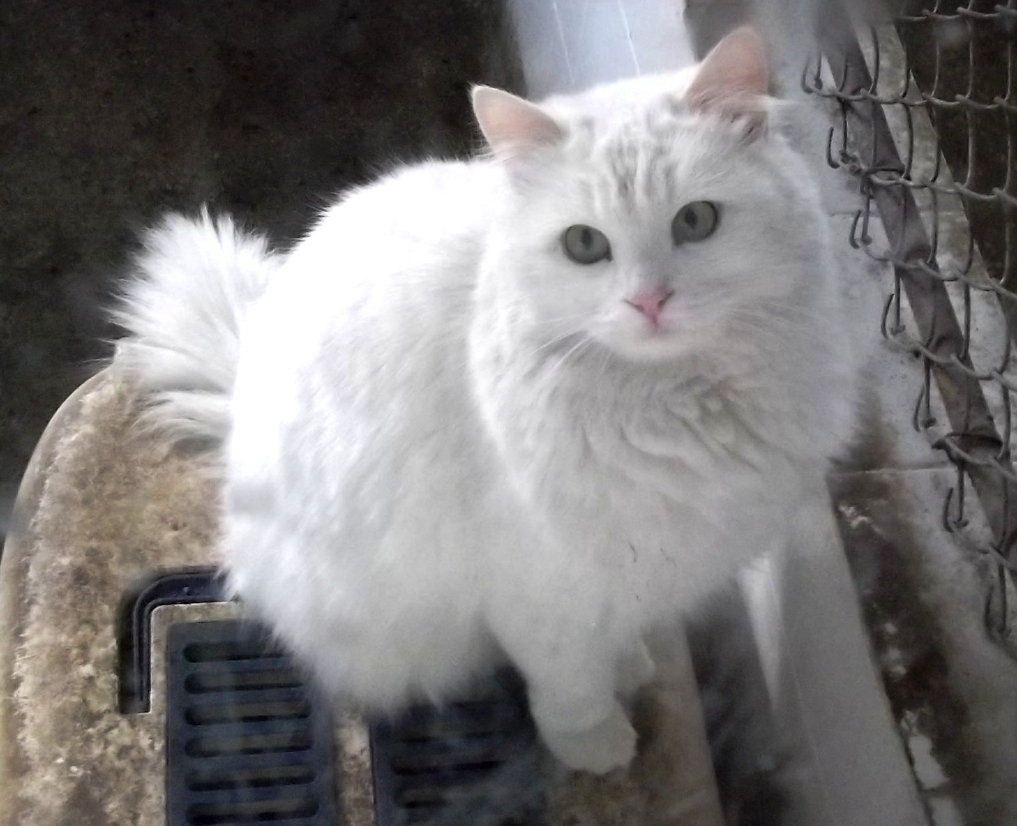

- Origin
- Turkey
- Type
- Longhair
- Coat
- Long and silky, with a plumed tail
- Colors
- White is traditional; most colors except chocolate, lavender and colorpoint
- Status
- Recognised by the CFA, TICA and FIFe
The Turkish Angora is one of the old natural cat breeds. It comes from central Anatolia, around Ankara in modern Turkey, and has been documented since the 17th century. Outside the United States it is usually just called the Angora or Ankara cat.
History
Longhaired cats were being brought to Britain and France from Asia Minor, Persia and Russia by the late 16th century, and the Angora was known in Europe as a distinct kind of cat by the 17th. For a long time, though, Angoras and Persians were hard to tell apart. A book of 1788 gave the two names as alternatives for the same cat, and in 1903 the writer Frances Simpson noted that the Angora had all but vanished from British shows and that nobody could tell her how it differed from a Persian. Angoras were used to improve the Persian’s coat, but the two types have moved further apart as the show Persian has become flat-faced.
In the early 20th century the Atatürk Forest Farm and Zoo in Ankara set up a breeding program to preserve pure white Angoras, prizing odd-eyed cats above all. Color was the only thing the cats were chosen for.
The breed reached Canada in 1963, and the CFA accepted it for championship in 1973. Until 1978 only white cats were recognised; today North American registries accept many colors and patterns. Numbers are still fairly small.
Breeders in Turkey argue that the fine-boned Western show cat does not represent the sturdier cats of their country. A genetic study published in 2012 found that American Turkish Angoras and cats imported from Turkey formed separate populations.
Appearance
The Turkish Angora has a long, slender, muscular body with fine bones, covered by a silky coat. The head is small to medium, a smooth wedge, with large, pointed, wide-set ears. The eyes are large and almond-shaped and may be blue, green, amber, yellow or odd-colored. The plumed tail is often carried straight up.
The breed is best known in shimmering white, but most other colors are allowed. Only chocolate, lavender and colorpoint are excluded.
Temperament
Turkish Angoras are playful, intelligent and athletic, and they like to be involved in what is going on. They bond closely with people and often pick one member of the household as their constant companion.
Care and health
The gene that gives a white coat and blue eyes can cause deafness. Ataxia has been reported in kittens, and hypertrophic cardiomyopathy in adult cats.
Facts on this page were checked against Wikipedia and may have changed since.